Wednesday, November 2, 2022

The new yoga : the yoga of light


Ex Deo Nascimur       In Christo Morimur       Per Spiritum Sanctum Reviviscimus


                                                  Striving Spirit-Powers
                                                  Struggle with Matter;
                                                  It is not Matter they find —
                                                  They find themselves.
                                                  They hover over the natural life,
                                                  Living within themselves:
                                                  Breathing the Power of Michael.


                                                  Ringende Geisteskräfte
                                                  Streben im Stoff;
                                                  Sie finden nicht den Stoff,
                                                  Sie finden sich selber.
                                                  Sie schweben über Natürlichem,
                                                  Sie leben in sich selber:
                                                  Michael-Kraft atmend.
                                                                            —Rudolf Steiner


Rudolf Steiner: "One who understands how to observe such things knows what a great change took place in the last third of the nineteenth century with respect to the life of human thought. Before that time man could only feel how thoughts formed themselves in his own being; from the time indicated he is able to raise himself above his own being; he can turn his mind to the spiritual; he there meets Michael, who proves his ancient kinship with everything connected with thought. He liberates thought from the sphere of the head; he clears the way for it to the heart; he enkindles enthusiasm in the feelings, so that the human mind can be filled with devotion for all that can be experienced in the light of thought.
    The Age of Michael has dawned. Hearts are beginning to have thoughts; spiritual fervor is now proceeding not merely from mystical obscurity but from souls clarified by thought. To understand this means to receive Michael into the heart. Thoughts which at the present time strive to grasp the spiritual must originate in hearts which beat for Michael as the fiery Prince of Thought in the universe."


Springing from powers of the Sun,
Radiant spirit-powers, blessing all worlds!
For Michael's garment of rays
You are predestined by Divine Thought.


He, the Christ messenger, reveals in you--
Bearing humankind aloft--the sacred will of worlds.
You, the radiant beings of ether worlds,
Bear the Christ-Word to human beings.


Thus shall the herald of Christ appear
To the thirstily waiting souls
To whom your Word of Light shines forth
In the cosmic age of the Spirit Human Being.


You, the disciples of spirit knowledge,
Take Michael's beckoning wisdom;
Take the Word of Love of the Will of Worlds
Into your soul's aspiring, fervently!


Then spake Jesus again unto them, saying, I am the light of the world: he that followeth me shall not walk in darkness, but shall have the light of life.  —John 8:12


John 3:11-21

Verily, verily, I say unto thee, We speak that we do know, and testify that we have seen; and ye receive not our witness.
If I have told you earthly things, and ye believe not, how shall ye believe, if I tell you of heavenly things?
And no man hath ascended up to heaven, but he that came down from heaven, even the Son of man which is in heaven.
And as Moses lifted up the serpent in the wilderness, even so must the Son of man be lifted up:
That whosoever believeth in him should not perish, but have eternal life.
For God so loved the world, that he gave his only begotten Son, that whosoever believeth in him should not perish, but have everlasting life.
For God sent not his Son into the world to condemn the world; but that the world through him might be saved.
He that believeth on him is not condemned: but he that believeth not is condemned already, because he hath not believed in the name of the only begotten Son of God.
And this is the condemnation, that light is come into the world, and men loved darkness rather than light, because their deeds were evil.
For every one that doeth evil hateth the light, neither cometh to the light, lest his deeds should be reproved.
But he that doeth truth cometh to the light, that his deeds may be made manifest, that they are wrought in God.


"Come unto me, all ye that labour and are heavy laden, and I will give you rest. Take my yoke upon you, and learn of me; for I am meek and lowly in heart: and ye shall find rest unto your souls. For my yoke is easy, and my burden is light."  — Matthew 11:28-30

"ES IST ICH"

"The Ancient Yoga Culture and the New Yoga Will. The Michael Culture of the Future"
Lecture 6 of The Mission of the Archangel Michael
Rudolf Steiner, Dornach, Switzerland
November 30, 1919

You have seen from my lectures of the last few days that it is necessary, for a complete understanding of the human being, to distinguish the various members of the human organism and to realize the incisive difference between that which we may call the human head organization and that which constitutes the rest of the human organization. As you know, the rest of the human organization consists of two members, so that on the whole we obtain a three-fold membering, but for the comprehension of the significant impulses in mankind's evolution with which we are faced at the present time and in the immediate future the differentiation between head man and the organization of the rest of man is primarily important.
Now, if we speak spiritual-scientifically about the human being by differentiating between head man and the rest of man, then these two organizations are, at the outset, pictures for us, pictures created by nature herself for the soul element, for the spiritual element, whose expression and manifestation they are. Man is placed in the whole evolution of earth humanity in a way which becomes comprehensible only if one considers how different is the position of the head organization in this evolution from that of the rest of the human organization. Everything connected with the head organization, which chiefly manifests as man's life of thought, is something that reaches far back in the post-Atlantean evolution of mankind. When we focus our attention upon the time which followed immediately after the great Atlantean catastrophe, that is, the time of the sixth, seventh, eighth millennium before the Christian era, we shall find a soul mood holding sway in the regions of the civilized world of that period which can hardly be compared with our soul mood. The consciousness and whole conception of the world of the human being of that time can scarcely be compared with that which characterizes our sense perception and conceptual view of the world. In my Occult Science, an Outline I have called this culture which reaches back into such ancient times, the primeval Indian culture. We may say: the human head organism of that time was different from our present head organism to a great degree and the reckoning with space and time was not characteristic of this ancient people as it is of us. In surveying the world, they experienced a survey of immeasurable spatial distances, and they had a simultaneous experience of the various moments of time. The strong emphasis on space and time in world conception was not present in that ancient period.
The first indications of this we find toward the fifth and fourth millennium in the period we designate the primeval Persian period. But even then the whole mood of soul life is such that it can hardly be compared with the soul and world mood of the human being of our age. In that ancient time, the main concern of the human being is to interpret the things of the world as various shades of light, brilliancy, and darkness, obscurity. The abstractions in which we live today are completely foreign to that ancient earth population. There still exists a universal, all-embracing perception, a consciousness of the permeation of everything perceptible with light and its adumbration, shading, with various degrees of darkness. This was also the way the moral world order was conceived of. A human being who was benevolent and kind was experienced as a light, bright human being, one who was distrustful and selfish was experienced as a dark man. Man's moral individuality was, as it were, aurically perceived around him. And if we had talked to a man of this ancient, primeval Persian time about that which we call today the order of nature, he would not have understood a word of it. An order of nature in our sense did not exist in his world of light and shadow. For him, the world was a world of light and shadow; and in the world of tones, certain timbres of sounding he designated as light, bright, and certain other timbres of sounding he designated as dark, shadowy. And that which thus expressed itself through this element of light and darkness constituted for him the spiritual as well as the nature powers. For him, there existed no difference between spiritual and natural powers. Our present-day distinction between natural necessity and human freedom would have appeared to him as mere folly, for this duality of human arbitrary will and the necessity of nature did not exist for him. Everything was to be included for him in one spiritual — physical unity. If I were to give you a pictorial interpretation of the character of this primeval-Persian world conception, I would have to draw the following line. (It will receive its full meaning only through that which will follow.)
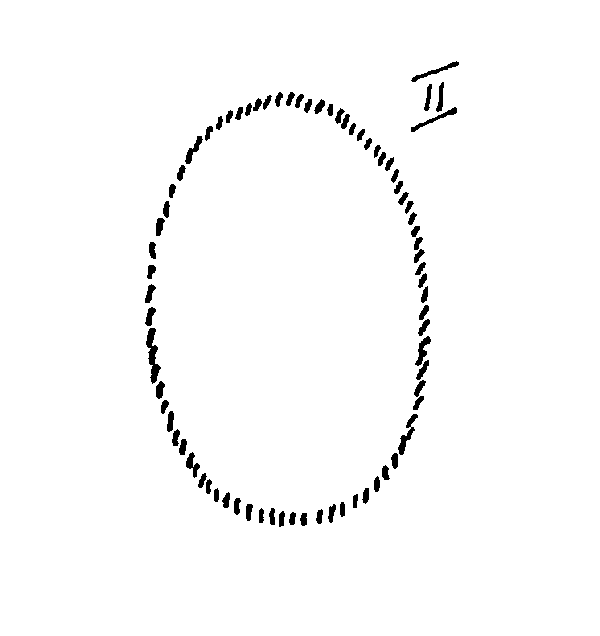
Diagram I from The Mission of Michael ...
Then after this soul mood of man had held sway for somewhat more than two thousand years, there appeared a soul mood, the echoes of which we can still perceive in the Chaldean, in the Egyptian world conception, and in a special form in the world conception whose reflection is preserved for us in the Old Testament. There something appears which is closer to our own world conception. There the first inkling of a certain necessity of nature enters human thoughts. But this necessity of nature is still far removed from that which we call today the mechanical or even the vital order of nature; at that time, natural events are conceived of as identical with Divine willing, with Providence. Providence and nature events are still one. Man knew that if he moved his hand it was the Divine within him, permeating him, that moved his hand, that moved his arm. When a tree was shaken by the wind, the perception of the shaking tree was no different for him from the perception of the moving arm. He saw the same divine power, as Providence, in his own movements and in the movements of the tree. But a distinction was made between the God without and the God within; he was, however, conceived of as unitary, the God in nature, the God in man; he was the same. And it was clear to human beings of that time that there is something in man whereby Providence that is outside in nature and Providence that is inside in man meet one another.
At that time, man's process of breathing was sensed in this way. People said: If a tree is shaking, this is the God outside, and if I move my arm, it is the God inside; if I inhale the air, work it over within me, and again exhale it, then it is the God from outside who enters me and again leaves me. Thus the same divine element was sensed as being outside and inside, but simultaneously, in one point, outside and inside; people said to themselves: By being a breathing being, I am a being of nature outside and at the same time I am myself.
If I am to characterize the world conception of the third culture period by a line, as I have done for the primeval Persian world conception by the line of the preceding drawing, I shall have to characterize it through the following line:
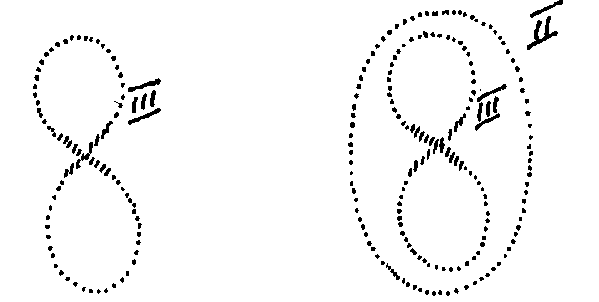
Diagram II from The Mission of Michael ...

This line represents, on the one hand, the existence of nature outside, on the other hand, human existence, crossing over into the other at the one point, in the breathing process.
Matters become different in the fourth age, in the Graeco-Latin age. Here the human being is abruptly confronted by the contrast outside-inside, of nature existence and human existence. Man begins to feel the contrast between himself and nature. And if I am again to draw characteristically how man begins to feel in the Greek age, I will have to draw it this way: on the one hand he senses the external and on the other the internal; between the two there is no longer the crossing point.
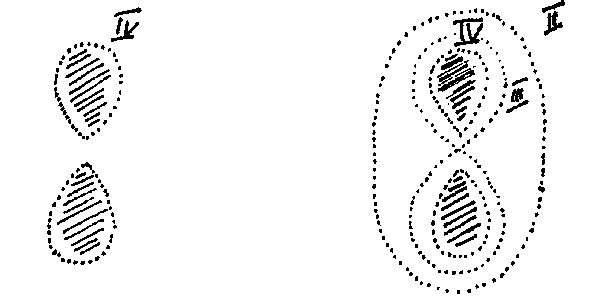
Diagram III from The Mission of Michael ...

What man has in common with nature remains outside his consciousness. It falls away from consciousness. In Indian Yoga an attempt is made to bring it into consciousness again. Therefore Indian Yoga culture is an atavistic returning to previous evolutionary stages of mankind, because an attempt is made again to bring into consciousness the process of breathing, which in the third age was felt in a natural way as that in which one existed outside and inside simultaneously. The fourth age begins in the eighth pre-Christian century. At that time the late-Indian Yoga exercises were developed which tried to call back, atavistically, that which mankind had possessed at earlier times, quite particularly in the Indian culture, but which had been lost.
Thus, this consciousness of the breathing process was lost. And if one asks: Why did Indian Yoga culture try to call it back, what did it believe it would gain thereby? one has to answer: What was intended to be gained thereby was a real understanding of the outer world. For through the fact that the breathing process was understood in the third cultural age, something was understood within man that at the same time was something external.
This must again be attained; on another path, however. We live still under the after-effects of the culture in which a twofold element is present in the human soul mood, for the fourth period ends only around the year 1413, really only about the middle of the fifteenth century. We have, through our head organization, an incomplete nature conception, that which we call the external world; and we have through our inner organization, through the organization of the rest of man, an incomplete knowledge of ourselves.

Diagram IV from The Mission of Michael ...

That in which we could perceive a process of the world and at the same time a process of ourselves is eliminated; it does not exist for us.
It is now a question of consciously regaining that which has been lost. That means, we have to acquire the ability of taking hold of something that is in our inner being, that belongs to the outer and the inner world simultaneously, and which reaches into both.
This must be the endeavor of the fifth post-Atlantean period; namely, the endeavor to find something in the human inner life in which an outer process takes place at the same time.
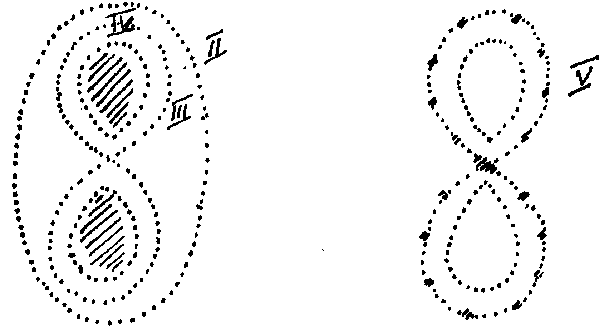
Diagram V from The Mission of Michael ...

You will remember that I have pointed to this important fact; I have pointed to it in my last article in Soziale Zukunft (The Social Future) {Soziale Zukunft, Vol. III: Geistesleben, Rechtsordnung, Wirtschaft (Spiritual Life, Rights order, Economy), Vol. IV: Dreigliederung und soziales Vertrauen (The Threefold Social Order and Social Confidence), where I seemingly dealt with these things in their importance for social life, but where I clearly pointed to the very necessity of finding something which the human being lays hold of within himself and which he, at the same time, recognizes as a process of the world. We as modern human beings cannot attain this by going back to Yoga culture; that has passed. For the breathing process itself has changed. This, of course, you cannot prove clinically; but the breathing process has become a different one since the third post-Atlantean cultural period. Roughly speaking, we might say: In the third post-soul; today he breathes air. Not only our thoughts have become materialistic; reality itself has lost its soul.
I beg you, my dear friends, not to see something negligible in what I am now saying. For just consider what it means that reality itself, in which mankind lives, has been transformed so that the air we breathe is something different from what it was four millennia ago. Not only the consciousness of mankind has changed, oh no! there was soul in the atmosphere of the earth. The air was the soul. This is it no longer today, or, rather, it is soul in a different way. The spiritual beings of elemental nature of whom I have spoken yesterday, they penetrate into you, they can be breathed if one practices Yoga breathing today. But that which was attainable in normal breathing three millennia ago cannot be brought back artificially. That it may be brought back is the great illusion of the Orientals. What I am stating here describes a reality. The ensouling of the air which belongs to the human being no longer exists. And therefore the beings of whom I spoke yesterday — I should like to call them the anti-Michaelic beings — are able to penetrate into the air and, through the air, into the human being, and in this way they enter into mankind, as I have described it yesterday. We are only able to drive them away if we put in the place of Yoga that which is the right thing for today. We must strive for this. We can only strive for that which is the right thing for today if we become conscious of a much more subtle relation of man to the external world, so that in regard to our ether body something takes place which must enter our consciousness more and more, similar to the breathing process. In the breathing process, we inhale fresh oxygen and exhale unusable carbon. A similar process takes place in all our sense perceptions. Just think, my dear friends, that you see something — let us take a radical case — suppose you see a flame. There a process takes place that may be compared with inhalation, only it is much finer. If you then close your eyes — and you can make similar experiments with every one of your senses — you have the after-image of the flame which gradually changes — dies down, as Goethe said. Apart from the purely physical aspect, the human ether body is essentially engaged in this process of reception of the light impression and its eventual dying down. Something very significant is contained in this process: it contains the soul element which, three millennia ago, was breathed in and out with the air. And we must learn to realize the sense process, permeated by the soul element in a similar way we have realized the breathing process three millennia ago.
You see, my dear friends, this is connected with the fact that man, three millennia ago, lived in a night culture. Yahve revealed himself through his prophets out of the dreams of the night. But we must endeavor to receive in our intimate intercourse with the world not merely sense perceptions, but also the spiritual element. It must become a certainty for us that with every ray of light, with every tone, with every sensation of heat and its dying down we enter into a soul-intercourse with the world, and this soul-intercourse must become significant for us. We can help ourselves to bring this about.
I have described to you the occurrence of the Mystery of Golgotha in the fourth post-Atlantean period which, if we wish to be accurate, begins with the year 747 B.C. and ends with the year 1413 A.D. The Mystery of Golgotha occurred in the first third of this period, and it was comprehended at the outset, with the remnants of the ancient mode of thought and culture. This ancient way of comprehending the Mystery of Golgotha is exhausted and a new way of comprehension must take its place. The ancient way does no longer suffice, and many attempts that have been made to enable human thinking to grasp the Mystery of Golgotha have proved unsuitable to reach up to it.
You see, dear friends, all external-material things have their spiritual-soul aspect, and all things that appear in the spiritual-soul sphere have their external-material aspect. The fact that the air of the earth has become soul-void, making it impossible for man to breathe the originally ensouled air, had a significant spiritual effect in the evolution of mankind. For through being able to breathe in the soul to which he was originally related, as is stated at the beginning of the Old Testament: “And God breathed into man the breath as living soul,” man had the possibility of becoming conscious of the pre-existence of the soul, of the existence of the soul before it had descended into the physical body through birth or through conception. To the degree the breathing process ceased to be ensouled the human being lost the consciousness of the pre-existence of the soul. Even at the time of Aristotle in the fourth post-Atlantean period it was no longer possible to understand, with the human power of comprehension, the pre-existence of the soul. It was utterly impossible.
We are faced with the strange historical fact that the greatest event, the Christ Event, breaks in upon the evolution of the earth, yet mankind must first become mature in order to comprehend it. At the outset, it is still capable of catching the rays of the Mystery of Golgotha with the remnants of the power of comprehension originating in primeval culture. But this power of comprehension is gradually lost, and dogmatism moves further and further away from an understanding of the Mystery of Golgotha. The Church forbids the belief in the pre-existence of the soul — not because pre-existence is incompatible with the Mystery of Golgotha, but because the human power of comprehension ceased to experience the consciousness of pre-existence as a force, the air having become soul-void. Pre-existence vanishes from head-consciousness. When our sense processes will become ensouled again, we shall have established a crossing point, and in this crossing point we shall take hold of the human will that streams up, out of the third stratum of consciousness, as I have described it to you recently. Then we shall, at the same time, have the subjective-objective element for which Goethe was longing so very much. We shall have the possibility of grasping, in a sensitive way, the peculiar nature of the sense process of man in its relation to the outer world. Man's conceptions are very coarse and clumsy, indeed, which maintain that the outer world merely acts upon us and we, in turn, merely react upon it. In reality, there takes place a soul process from the outside toward the inside, which is taken hold of by the deeply subconscious, inner soul process, so that the two processes overlap. From outside, cosmic thoughts work into us, from inside, humanity's will works outward. Humanity's will and cosmic thought cross in this crossing point, just as the objective and the subjective element once crossed in the breath. We must learn to feel how our will works through our eyes and how the activity of the senses delicately mingles with the passivity, bringing about the crossing of cosmic thoughts and humanity's will. We must develop this new Yoga will. Then something will be imparted to us that of like nature to that which was imparted to human beings in the breathing process three millennia ago. Our comprehension must become much more soul-like, much more spiritual.
Goethe's world conception strove in this direction. Goethe endeavored to recognize the pure phenomenon, which he called the primal phenomenon, by arranging the phenomena which work upon man in the external world, without the interference of the Luciferic thought which stems from the head of man himself; this thought was only to serve in the arranging of the phenomena. Goethe did not strive for the law of nature, but for the primal phenomenon; this is what is significant with him. If, however, we arrive at this pure phenomenon, this primal phenomenon, we have something in the outer world which makes it possible for us to sense the unfolding of our will in the perception of the outer world, and then we shall lift ourselves to something objective-subjective, as it still was contained, for instance, in the ancient Hebrew doctrine. We must learn not merely to speak of the contrast between the material and the spiritual, but we must recognize the interplay of the material and the spiritual in a unity precisely in sense perception. If we no longer look at nature merely materially and, further, if we do not “think into it” a soul element, as Gustave Theodore Fechner did, then something will arise which will signify for us what the Yahve culture signified for mankind three millennia ago. If we learn, in nature, to receive the soul element together with sense perception, then we shall have the Christ relationship to outer nature. This Christ relationship to outer nature will be something like a kind of spiritual breathing process.
We shall be aided by realizing more and more, with our sound common sense, that pre-existence lies at the basis of our soul existence. We must supplement the purely egotistical conception of post-existence, which springs merely from our longing to exist after death, by the knowledge of the pre-existence of the soul. We must again rise to the conception of the real eternity of the soul. This is what may be called Michael culture. If we move through the world with the consciousness that with every look we direct outward, with every tone we hear, something spiritual, something of the nature of the soul element, streams out into the world, we have gained the consciousness which mankind needs for the future.
I return once more to the image: You see a flame. You shut your eyes and have the after-image which ebbs away. Is that merely a subjective process? Yes, says the modern physiologist. But this is not true. In the cosmic ether this signifies an objective process, just as in the air the presence of carbonic acid which you exhale signifies an objective process. You are dealing here with the objective element; you have the possibility of knowing that something which takes place within you is at the same time a delicate cosmic process, if you become but conscious of it. If I look at a flame, close my eyes, let it ebb away — it will ebb away even though I keep my eyes open, only then I will not notice it — then I experience a process which does not merely take place within me, but which takes place in the world. But this is not only the case in regard to the flame. If I confront a human being and say: this man has said this or that, which may be true or untrue, this then constitutes a judgment, a moral or intellectual act of my inner nature. This ebbs away like the flame. It is an objective world process. If you think something good about your fellow-man: it ebbs away and is an objective process in the cosmic ether; if you think something evil: it ebbs away as an objective process. You are unable to conceal your perceptions and judgments about the world. You seemingly carry them on in your own being, but they are at the same time an objective world process. Just as people of the third period were conscious of the fact that the breathing process is a process that takes place simultaneously within man and in the objective world, so mankind must become aware in the future that the soul element of which I spoke is at the same time an objective world process.
This transformation of consciousness demands greater strength of soul than is ordinarily developed by the human being of today. To permeate oneself with this consciousness means to permit the Michael culture to enter. Just as it was self-evident for the man of the second and third pre-Christian millennium to think of the air as ensouled — so must it become self-evident for us to think of light as ensouled; we must arouse this ability in us when we consider light the general representative of sense perception We must thoroughly do away with the habit of seeing in light that which our materialistic age is accustomed to see in it. We must entirely cease to believe that merely those vibrations emanate from the sun of which, out of the modern consciousness, physics and people in general speak. We must become clear about the fact that the soul element penetrates through cosmic space upon the pinions of light; and we must realize, at the same time, that this was not the case in the period preceding our age. That which approaches mankind today through light approached mankind of that former period through the air. You see here an objective difference in the earth process. Expressing this in a comprehensive concept, we may say, Air-soul-processLight-soul-process. This is what may be observed in the evolution of the earth. The Mystery of Golgotha signifies the transition from the one period to the other.
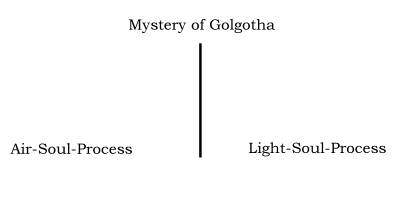
Diagram VI from The Mission of Michael ...

My dear friends, it does not suffice, for the present age nor for the future age of mankind, to speak in abstractions about the spiritual, to fall into some sort of nebulous pantheism; on the contrary, we must begin to recognize that that which today is sensed as a merely material process is permeated by soul.
It is a question of learning to say the following: there was a time prior to the Mystery of Golgotha when the Earth had an atmosphere which contained the soul element that belongs to the soul of man. Today, the Earth has an atmosphere which is devoid of this soul element. The same soul element that was previously in the air has now entered the light which embraces us from morning to evening. This was made possible through the fact that the Christ has united Himself with the Earth. Thus, also from the soul-spiritual aspect, air and light have undergone a change in the course of Earth evolution. My dear friends, it is a childish presentation that describes air and light in the same manner, purely materially, throughout the millennia in which Earth evolution has unfolded. Air and light have changed inwardly. We live in an atmosphere and in a light sphere that are different from those in which our souls lived in previous earthly incarnations. To learn to recognize the externally-material as a soul-spirited element: this is what matters. If we describe purely material existence in the customary manner and then add, as a kind of decoration: "This material existence contains everywhere the spiritual!" — this will not produce genuine spiritual science. 
My dear friends, people are very strange in this respect; they are intent on withdrawing to the abstract. But what is necessary is the following: in the future we must cease to differentiate abstractly between the material and the spiritual, but we must look for the spiritual in the material itself and describe it as such; and we must recognize in the spiritual the transition into the material and its mode of action in the material. Only if we have attained this shall we be able to gain a true knowledge of man himself. 
“Blood is quite a special fluid,” but the fluid physiology speaks about today is not a “special fluid,” it is merely a fluid whose chemical composition one attempts to analyze in the same way any other substance is analyzed; it is nothing special. But if we have gained the starting point of being able to understand the metamorphosis of air and light from the soul aspect, we shall gradually advance to the soul-spiritual comprehension of the human being himself, in every respect; then we shall not have abstract matter and abstract spirit, but spirit, soul, and body working into one another. This will be Michael-culture.
This is what our time demands. This is what ought to be grasped with all the fibers of the soul life by those human beings who wish to understand the present time. Whenever something out of the ordinary had to be introduced into human world conception it met with resistance. I have often quoted the following neat example: In 1837 (not even a century ago), the learned Medical College of Bavaria was asked, when the construction of the first railroad from Fuerth to Nuremberg was proposed, whether it was hygienically safe to build such a railroad. The Medical College answered (I am not telling a fairy tale, the documents concerning it exist): Such a railroad should not be built, for people who would use such a means of transportation would become nervously ill. And they added: Should there be such people who insist on such railroads, then, it is absolutely necessary to erect, on the right and left side of the tracks, high plank walls to prevent the people whom the train passes from getting concussion of the brain. Here you see, my dear friends, such a judgment is one thing; quite another is the course which the evolution of mankind takes. Today we smile about such a document as that of the Bavarian Medical College of 1837; but we are not altogether justified in smiling; for, if something similar occurs today, we behave in quite the same manner. And, after all, the Bavarian Medical College was not entirely wrong. It we compare the state of nerves of modern mankind with that of mankind two centuries ago, then we must say that people have become nervous. Perhaps the Medical College has exaggerated the matter a bit, but people did become nervous. Now, in regard to the evolution of mankind it is imperative that certain impulses which try to enter Earth evolution really should enter and not be rejected. That which from time to time wishes to enter human cultural development is often very inconvenient for people, it does not agree with their indolence, and what is duty in regard to human cultural development must be recognized by learning to read the objective facts, and must not be derived from human indolence, not even from a refined kind of indolence. I am concluding today's lecture with these words because there is no doubt that a strongly increasing battle will take place between anthroposophical cognition and the various creeds. We can see the signs for this on all sides. The creeds who wish to remain in the old beaten tracks, who do not wish to arouse themselves to a new knowledge of the Mystery of Golgotha, will reinforce their strong fighting position which they already have taken up, and it would be very frivolous, my dear friends, if we would remain unconscious of the fact that this battle has started.
I myself, you can be sure, am not at all eager for such a battle, particularly not for a battle with the Roman Catholic Church which, it seems, is forced upon us from the other side with such violence. He who, after all, thoroughly knows the deeper historical impulses of the creeds of our time will be very unwilling to fight time-honored institutions. But if the battle is forced upon us, it is not to be avoided! And the clergy of our day is not in the least inclined to open its doors to that which has to enter: the spiritual-scientific world conception. Remember the grotesque quotations I read to you recently where it was said that people should inform themselves about anthroposophically-oriented spiritual science through the writings of my opponents, since Roman-Catholics are forbidden by the Pope to read my own writings. This is not a light matter, my dear friends; it is a very serious matter! A battle which arises in such a manner, which is capable of disseminating such a judgment in the world, such a battle is not to be taken lightly. And what is more; it is not to be taken lightly since we do not enter it willingly. Let us take the example of the Roman-Catholic Church, my dear friends; matters are not different in regard to the Protestant Church, but the Roman-Catholic church is more powerful — and we have to consider time-honored institutions: if one understands the significance of the vestments of the priest when he reads the Holy Mass, the meaning of every single piece of his priestly garments, if one understands every single act of the Holy Mass, then one knows that they are sacred, time-honored establishments; they are establishments more ancient than Christianity for the Holy Mass is a ritual of the ancient Mystery culture, transformed in the Christian sense. And modern clergy who uses such weapons as described above lives in these rituals! Thus, if one has, on the one hand, the deepest veneration for the existing rituals and symbolism, and sees, on the other hand, how insufficient is the defense of and how serious are the attacks against that which wishes to enter mankind's evolution, then one becomes aware of the earnestness that is necessary in taking a stand in these matters. It is truly something worth deep study and consideration. What is thus heralded from that side is only at its beginnings; and it is not right to sleep in regard to it; on the contrary, we have to sharpen our perception for it. During the two decades in which the Anthroposophical Movement has been fostered in Middle Europe, we could indulge in sectarian somnolence which was so hard to combat in our own ranks and which still today sits so deeply embedded in the souls of the human beings who have entered the Anthroposophical Movement. But the time has passed in which we might have been allowed to indulge in sectarian somnolence. That which I have often emphasized here is deeply true, namely, that it is necessary that we should grasp the world-historical significance of the Anthroposophical Movement and overlook trifles, but that we should also consider the small impulses as serious and great.


Related posts:

Tuesday, November 1, 2022

Washed in the Blood of the Lamb are We


At-one-ment 


Washed in the Blood of the Lamb are We
Awash in a Sonburst Sea
You—Love—and I—Love—and Love Divine:
We are the Trinity


You—Love—and I—We are One-Two-Three
Twining Eternally
Two—Yes—and One—Yes—and also Three:
One Dual Trinity
Radiant Calvary
Ultimate Mystery


Christ and the Maitreya Buddha: Jeshu ben Pandira. Lecture 2: The Human Chain of Being


Rudolf Steiner, November 5, 1911:


Since we spoke yesterday of the differentiation of the soul life of the human being into three parts — the realm of concepts, or of thought, the realm of emotions, and the realm of will impulses — it should be interesting to us now to raise the question: How can self-discipline, the nurturing of the soul life, set to work in the appropriate way to develop and to cultivate these three parts of the soul life? Here we shall begin with our life of will, our will impulses, and shall ask ourselves: What characteristics must we specially cultivate if we wish to work in a beneficial way on our will life?
Most beneficial of all in our will nature is the influence of a life directed in its entire character towards a comprehension of karma. We might also say a soul life which strives to develop, as its primary characteristic, serenity and acceptance of our destiny. And what better way can one find of developing this acceptance, this calmness of soul in the presence of one's destiny, than by making karma an actual content in one's life?
What do we mean by this? It means that — not merely theoretically but in a living way — when our own sorrow or the sorrow of another comes upon us, when we experience joy or the heaviest blow of fate, we shall really be fully aware that, in a certain higher sense, we ourselves have given the occasion for this painful blow of fate: this means developing such a mood that we accept an experience of joy with gratitude, but are also clearly aware, especially in regard to joy, that we must not go to excess, since this is perilous. If we desire to progress in our development, we can conceive joy in the following way. For the most part, joy is something which points to a future destiny, not to one already past. In human life joy is usually something one has not deserved through previous actions. When we investigate karma by occult means, we always discover that in most cases joy has not been earned, and we should accept it gratefully as sent to us by the gods, as a gift of the gods, and to say to ourselves: The joy which comes to meet us today ought to kindle in us the will to work in such a way as to take into ourselves the forces streaming to us through this joy, and to apply these usefully. We must look upon joy as a sort of prepayment on account for the future.
In the case of pain, on the other hand, we have usually merited this, and we always find the cause in our present life or in earlier lives. And we must then realise with the utmost clarity that we have often failed to conduct ourselves in our external life in accordance with this karmic mood. We are not able to conduct ourselves always in external life in the presence of what causes us pain in such a way that our conduct shall seem to be an acceptance of our destiny. We do not generally have an insight into such a thing at once — into the law of destiny. But, even though we are not able to conduct ourselves outwardly in such a way, yet the principal thing is that we shall do this inwardly.
And even if we have conducted ourselves outwardly in accordance with this karmic mood, yet we should say to ourselves in the depths of our souls that we ourselves have been the cause of all such things. Suppose, for instance, that someone strikes us, that he beats us with a stick. In such a case it is generally characteristic for a person to ask: ‘Who is it that strikes me?’ No one says in such a case: ‘It is I that beat myself.’ Only in the rarest cases do people say that they punish themselves. And yet it is true that we ourselves lifted the stick against another person in days gone by. Yes, it is you yourself who then raised the stick. When we have to get rid of a hindrance, this is karma. It is karma when others hold something against us. It is we ourselves who cause something to happen to us as recompense for something we have done. And thus we come to a right attitude toward our life, to a broadening of our self, when we say: ‘Everything that befalls us comes from ourselves. Our own action is fulfilled outwardly even when it seems as if someone else performed it.’
If we develop such a way of viewing things, then our serenity, our acceptance of our karma in all occurrences, strengthens our will. We grow stronger in facing life with serenity, never weaker. Through anger and impatience we become weak. In the face of every occurrence we are strong when we are serene. On the contrary, we become continually weaker in will through moroseness and an unnatural rebellion against destiny.
Of course, we must view within a broad compass what we consider as destiny. We must conceive this destiny of ours in such a way that we say to ourselves, for instance, that the development of precisely one power or another at a certain period of one's life belongs also to a person's karma. And mistakes are often made just here in the education of children. Here karma comes into contact with the problem of education, for education is destiny, the karma of the human being in youth.
We weaken the will of someone when we expect him to learn something, to do something for which his capacities are not yet adequate. In educating one must come to see clearly in advance what is suitable for each stage of life in accordance with the universal karma of humanity, so that the right thing may be done. Doing the wrong thing is raising a rebellion against destiny, against its laws, and is associated with enormous weakening of the will. It is not possible to discuss here how a weakening of the will is associated with all premature awakening of the sensual appetites and passions. It is the prematurely awakened appetites, instincts and passions which are especially subject to this law. For making premature use of the bodily organs is contrary to destiny. All that is directly against the karma of humanity, all actions opposing the existing arrangements of nature, are associated with a weakening of the will.
Since people have been for a long time without any true fundamental principles of education, there are many persons in the world now who did not pass through their youth in the right way. If humanity does not determine to direct what is most important of all, the education of youth, according to Spiritual Science, a race will arise with ever weaker wills — and this not in a merely external sense. This takes a deep hold of the life of the human being. Ask a number of people how they came into their present occupations. You may be sure that most of them will answer: ‘Well, we don't know; we have in some way been pushed into this situation.’ This feeling that one has been pushed into something, has been driven into it, this feeling of discontent, is also a sign of weakness of will.
Now, when this weakness of will is brought about in the manner described, still other results follow from this for the human soul, especially when the weakness of will is evoked in such a way that states of anxiety, of fear, of despair are produced at a youthful age. It will be increasingly necessary for human beings to have a fundamental understanding of the higher laws in order to overcome states of despair, for it is precisely despair which is to be expected when we do not proceed in accordance with knowledge of the spirit.
By means of a monistic and materialistic world view it is possible to maintain only two generations of persons with strong wills. Materialism can satisfy just two generations: the one that founded the conception and the pupils who have received it from the founders. This is the peculiarity of the monistic and materialistic world view: the one who works in the laboratory or the workshop and who founded the view, whose powers are fully occupied and activated by what he is building up in his mind, experiences an inner satisfaction. But one who merely associates himself with these theories, who takes over a materialism ready-made, will not be able to achieve this inner satisfaction; and then despair will work back upon the culture of the will, and evoke weakness of will. Weakening of the will, human beings lacking energy, will be the results of this world view.
The second of the three aspects of the supersensible life we mentioned yesterday is that of the emotions. What affects the emotions favourably?
If we take the utmost pains to acquire an attentive attitude of mind, a marked attentiveness to the events in our surroundings — and do not imagine that this attentiveness is very generally and strongly developed by people — this can be of great value to us. I must repeatedly mention a single illustration. In a certain country the order of the examinations for teachers was once altered, and for this reason all the school teachers had to sit the examinations again. The examiner had to test both old and young teachers. The young ones could be tested on the basis of what they had learned in the teachers' colleges. But how should he test the old teachers? He decided to ask them about nothing except the subjects which they had themselves been teaching year after year in their own classes, and the result showed that very many of them had no notion of the very subjects they themselves had been teaching!
This attentiveness, this habit of following with vital interest the things that occur in one's environment, is most beneficial especially in the cultivation of the emotions.
Now, the emotions, like everything else in the soul, are connected in a certain way with the will; and, when we influence our emotional life unfavourably, we may thus indirectly influence our will impulses. We nurture our emotions favourably when we place ourselves under the law of karma in connection with our anger and our passions, when we hold fast to karma. And this we find in what occurs in our environment. We find it, for example, when anyone does the opposite of what we had expected. We may then say to ourselves: ‘All right; that is simply what he is doing!’ But we may also become angry and violent, and this is a sign of weakness of will.
Outbursts of violent temper hinder the right development of the emotions and also the will, and also have a far more extensive influence, as we can see at once. Now, anger is something that a person does not by any means have under his control. Only gradually can he master the habit of becoming angry, and one must have patience with oneself. To anyone who believes he can achieve this with a turn of the hand I must repeat the story of a teacher who took very much to heart the task of ridding his pupils of anger. When he was faced by the fact, that after constant efforts, a boy still became angry, he himself became so angry that he threw the ink bottle at the child's head. A person who permits himself to do such a thing must think for many, many weeks about karma.
What this signifies will become clear to us if we take this occasion to look a little more deeply into the life of the human soul. There are two poles in the soul life, the life of will on the one hand and that of thoughts, of conceptions, on the other. The emotions, the feelings of the heart, are in the middle. Now, we know that the life of man alternates between sleeping and waking; and, while the human being is awake, his life of thoughts and conceptions is especially active. For the fact that the will is not very wide awake can become clear to anyone who observes closely, how a will impulse comes about. We must first have a thought, a concept; only then does the will thrust upward from the depths of the soul. The thought evokes the will impulse. When the human being is awake, he is awake in thought, not in will.
But occult science teaches us that when we sleep, everything is reversed. Then the will is awake and is very active, and thought is inactive. This cannot be known by the human being in a normal state of consciousness, for the simple reason that he knows things only by means of his thoughts and these are asleep. Thus he does not observe that his will is active. When he attains clairvoyance and arrives at the world of imaginative representations, he then observes that the will awakes the moment thinking falls asleep. And the will slips into the pictures he perceives and awakens these. The pictures are then woven out of will. Thus the thoughts are then asleep but the will is awake.
But this being awake in our will is connected with our total human nature in a manner entirely different from the way our thoughts are connected. Depending on whether the person works or does not work, is well or ill, is serene or hot-tempered, the will becomes healthy or unhealthy. And according as our will is healthy or unhealthy it works in the night on the condition of our life, even into the physical body. Very much depends upon whether one develops a mood of serenity during the day, acceptance of his destiny, and thus prepares his will so that this will may be said to develop a pleasant warmth, a feeling of well-being, or whether, on the other hand, he develops anger. This unhealthiness of the will streams into the body during the state of sleep at night and is the cause of numerous illnesses, whose causes are sought for but not found because the resulting physical illnesses appear only after the lapse of years or even decades. Only one who surveys great stretches of time can see in this way the connection between conditions of the soul and of the body. Even for the sake of bodily health, therefore, the will must be disciplined.
We can also influence our emotions through serenity and acceptance of our karma so that they work beneficially even upon our bodily Organisation. On the other hand, in no other way do we injure this Organisation more than through apathy, lack of interest in what is occurring around us. This apathy is spreading more and more; it is the reason why so few persons take an interest in — spiritual things. It may be supposed that objective reasons lead to the adoption of a materialistic view of life. There are really by no means such great objective reasons for a materialistic view of life. No, it is apathy; no one can be a materialist without being apathetic. It is a lack of attention to our surroundings. Anyone who observes his environment with alert interest is confronted on all sides with what can only be harmonised by spiritual knowledge. But apathy deadens the emotions and leads to weakness of will.
Furthermore, special significance attaches to the characteristic called obstinacy — the attitude of mind that insists inflexibly upon one thing or another. Unhealthy emotions can also bring about obstinacy. These things are often like the serpent that bites his own tail. All that we have mentioned may be caused by obstinacy. Even persons who go through life very inattentively may be very obstinate. Persons who are altogether weak-willed are often discovered to be obstinately persisting in something when we had not expected it, and the weakness of will becomes constantly more marked if we do not strive to overcome obstinacy. It is precisely in persons with weak wills that we find this quality of obstinacy. On the other hand, when we endeavour to avoid the development of obstinacy, we shall see that in every instance we have improved our emotions and strengthened our wills. Every time that we actually are goaded by an impulse to be obstinate but refuse to yield to it, we become stronger for the task of confronting life. We shall observe the fruits if we proceed systematically against this fault; through struggling to overcome obstinacy we attain to inner satisfaction. The nurturing of our emotions specially depends upon our struggling in every way to overcome obstinacy, apathy, lack of interest. In other words, interest and attentiveness in relation to the environment foster both the feelings and the will. Apathy and obstinacy have the opposite effect.
For a sound emotional life, we have the fine word ingenuity. * [Sinnigkeit, the gift or capacity of inventive or creative fantasy.] Being creatively fanciful means that something ingenious occurs to one. Children ought to play in such a way that the fantasy is stimulated, that the spontaneous activity of their souls is stimulated, so that they have to reflect about their play. They ought not to arrange building blocks according to patterns: this merely develops pedantry, not creative fantasy. We are developing creative fantasy when we let children do all sorts of things in sand, when we take them into the woods and let them form little baskets out of burs, and then stimulate them to make other things of burs stuck together. Things which cause a certain inventive talent to expand nourish creative fantasy. Strange as it may seem, such cultivation of creative fantasy brings serenity of soul, inner harmony, and contentment,
Moreover, when we go for a walk with a child, it is good to leave him free to do whatever he will, provided he does not behave too badly. And, when the child does anything, we should show our pleasure, our participation and interest; we should not be unresponsive or lacking in interest in what the child produces out of his own inner nature. Even when instructing a child, we should connect what we teach him with the forms and processes of nature. When children reach an older stage, we should not then occupy them with riddles or puzzles taken from newspapers; this leads only to pedantry. On the contrary, observation of nature offers us the opposite of what is afforded by the press for the cultivation of the emotional life. A serene heart, a harmonious life of feeling, determines not only mental health but also bodily health, even though long stretches of time may intervene between cause and effect.
We come now to the third aspect of the supersensible life, to thinking. This, we nurture and sharpen, especially by the development of characteristics which seem to have nothing whatever to do with thinking, with concepts. The best method of developing good thinking is by complete absorption and insight, not so much through logical exercises but by observing one thing and another, using for this purpose processes in nature, in order to penetrate into hidden mysteries. Through absorption in problems of nature and of humanity, through the endeavour to understand complex personalities, through the intensifying of attentiveness, we grow wise. Absorption means striving to unravel something by thinking, by conceiving. In this connection, we shall be able to see that such mental absorption has a wonderfully good effect in later life.
The following example is taken from life. A little boy showed his mother remarkable aspects of his observation, which were associated with extraordinary absorption and capacity for insight. He said: ‘You know, when I walk on, the streets and see persons and animals, it seems as if I had to enter into the persons and the animals. It happened that a poor woman met me, and I entered into her, and this was terribly painful to me, very distressing.’ (The child had not seen any sort of destitution at home, but lived in altogether good circumstances.) ‘And then I entered into a horse and then into a pig.’ He described this in detail, and was stimulated to an extraordinary degree of compassion, to special deeds of pity, through feeling union with the life of others. Whence does this come, this expansion of one's understanding for other beings? If we think the matter over in this case, we are led back into the preceding incarnation, when the person in question had cultivated absorption in things, in the secrets of things, as we have described.
But we do not have to wait till the next incarnation for the results which follow the cultivation of absorption. These manifest themselves even in a single life. When we are induced in earliest youth to develop all of this, we shall develop in later life a clear, transparent thinking, whereas otherwise we develop a scrappy, illogical thinking. It is a fact that truly spiritual principles can advance us in our course of life.
During recent decades there have been few truly spiritual fundamental principles of education, almost none at all. And now we are experiencing the results. There is an extraordinary amount of wrong thinking in our day. One can suffer the pains of martyrdom from the terribly illogical life of the world. Anyone who has acquired a certain clairvoyance does not simply feel that one thing is correct and another incorrect, but he suffers actual pain when confronted by illogical thinking, and a sense of well-being in connection with clear, transparent thinking. This signifies that he has acquired a feeling for such things, and this enables him to make decisions. And this brings far truer differentiations when one has actually reached this stage. It gives a far truer discrimination between truth and untruth. This seems incredible, but it is true. When something erroneous is said in the presence of a clairvoyant person, the pain which rises in him shows him that this is illogical, erroneous. Illogical thinking is extraordinarily widespread; at no time has illogical thinking been so widespread as precisely in our time, in spite of the fact that people pride themselves so much on their logical thinking. Here is an example that may well seem somewhat crass, but it is typical of the habit of passing through experiences without interest or thought.
I was once traveling from Rostock to Berlin. Into my compartment entered two persons, a gentleman and a lady. I sat in one comer and wished only to observe. The gentleman was very soon behaving in a strange manner, though he was otherwise probably a well-educated person. He lay down, sprang up again in five minutes; then again he groaned pitiably. Since the lady thought he was ill, she was seized by pity, and very soon a conversation was in full course between them. She told him that she had clearly observed that he was ill, but she knew what it meant to be ill, for she was ill also. She said she had a basket with her in which she had everything that was curative for her. She said: ‘I can cure anything, for I have the remedy for everything. And just think what a misfortune has befallen me! I have come from the far interior of Russia all the way here to the Baltic Sea, in order to recuperate and to do something for my ailment, and, just as I arrive, I find that I have left at home one of my important remedies. Now I must turn back at once, and this hope also has been in vain.’
The gentleman then narrated his sufferings, and she gave him a remedy for each of his illnesses, and he promised to do everything, making notes about all. I think there were eleven different prescriptions. She then began to enumerate all of her illnesses one by one; and he began to show his knowledge of what would cure them: that for one ailment she could be helped in a certain sanatorium, and for another in another sanatorium. She, in turn, wrote down all the addresses and was only afraid that the pharmacies might be closed for Sunday when she arrived in Berlin. These two persons never for one moment noticed the strange contradiction that each knew only what might help the other one, but for himself and herself knew no means of help. This experience gave these two educated persons the possibility of bathing in a sea of nonsense that streamed forth from each of them.
Such things must be clearly seen when we demand that self-knowledge shall give insight. We must demand of self-knowledge that it shall develop coherence in thinking, but especially absorption in the matter in hand. All these things work together in the soul. Scrappy thinking has the inevitable result, even though only after a long time, of making the person morose, sullen, hypochondriacal about everything, and frequently we do not know where the causes of this are to be found. Insufficient cultivation of concentration and insight makes one sullen, morose, hypochondriacal. What is so absolutely essential to thinking seems to have nothing to do with it. All obstinacy, all self-seeking, have a destructive effect upon thinking. All characteristics connected with obstinacy and selfishness — such as ambition, vanity all these things that seem to tend in a very different direction make our thinking unsound, and act unfavourably upon our mood of soul. We must seek, therefore, to overcome obstinacy, self-seeking, egoism; and cultivate, on the contrary, a certain absorption in things and a certain self-sacrificing attitude toward other beings. Absorption, a self-sacrificing attitude, in regard to the most insignificant objects and occurrences have a favourable effect upon thinking and upon one's mood. In truth, self-seeking and egoism bring their own punishment because the self-seeking person becomes more and more discontented, complains more and more that he comes off badly. When anyone feels this way about himself, he ought to place himself under the law of karma and ask himself, when he is discontented: ‘What self-seeking has brought this discontent upon me?’
In just this way we can describe how we may develop and how injure the three parts of the soul life, and this is extraordinarily important. We see, therefore, that Spiritual Science lays deep hold upon our life, for true observation of spiritual principles may lead us to self-education, and this is of the most vital importance and will become of ever-increasing significance since the time in man's evolution has passed when human beings were led by the gods from above, from the higher worlds. In ever-increasing measure, men will have to do things for themselves, without being directed and led.
With regard to what the Masters have taught about our working our way upward to Christ, Who will appear even in this century on the astral plane, a greater understanding of this advance for humanity can be achieved only in this way: that the human being shall ever increasingly stimulate himself. Just as we explained to you yesterday that human beings gradually work their way upward to Christ, so must we gradually perfect in freedom our thinking, feeling, and will impulses. And this can be achieved only through self-mastery, self-observation. Just as in earlier times, in ancient clairvoyance, the impulses were given to men from above by the gods, so will man determine his own way in later times through the new clairvoyance. This is why Anthroposophy appears precisely in our time, so that mankind may learn to develop soul characteristics in the right way. In this way man learns to meet what the future will bring. Only in this way can we understand what must one day appear: that is, that those who are shrewd and immoral will be cast out and rendered harmless.
The characteristics mentioned are important for every human being. But they are of such a nature that they are especially important to those who are determined to strive to reach rapidly in rational ways those characteristics which are to become more and more necessary for humanity. For this reason it is the Leaders of human beings who strive to achieve this development in very special measure in themselves, because the highest attainments can be reached only by means of the highest attributes.
To the highest degree of all is this development carried through, for example, by that individuality who once ascended to the rank of a Bodhisattva, when the preceding Bodhisattva became a Buddha, and who has, since then, been incarnated once in nearly every century; who lived as Jeshu ben Pandira, herald of the Christ, a hundred years before Christ. Five thousand years are needed for his ascent to the rank of a Buddha, and this Buddha will then be the Maitreya Buddha. He will be a Bringer of the Good, because (as can be seen by those who are sufficiently clairvoyant) he succeeds, by most intense self-discipline, in developing to the utmost those powers which cause to emanate from him such magical moral forces as enable him to impart to souls through the word itself heart forces and moral impulses. We cannot as yet develop on the physical plane any words capable of doing this. Even the Maitreya Buddha could not do this at present — could not develop such magical words. Today only thoughts can be imparted by means of words.
How is he preparing himself? By developing to the highest possible degree those qualities which are called good. The Bodhisattva develops in the highest degree what we may describe as devotion, serenity in the presence of destiny, attentiveness to all occurrences in one's surroundings, devotion to all living beings, and insight. And, although many incarnations will be needed for the future Buddha, yet he devotes himself during his incarnations primarily to giving attention to what occurs even though what he now does is relatively little, since he is utterly devoted to the preparation for his future mission.
This will be achieved through the fact that a special law exists with regard to just this Bodhisattva. This law we shall understand if we take account of the possibility that a complete revolution in the soul's life may occur at a certain age.
The greatest of such transformations that ever occurred took place at the baptism by John. What occurred there was that the ego of Jesus, in the thirtieth year of His life, abandoned the flesh and another ego entered: the Ego of the Christ, the Leader of the Sun Beings.
A like transformation will be experienced by the future Maitreya Buddha. But he experiences such a revolution in his incarnations quite differently. The Bodhisattva patterns his life on that of Christ, and those who are initiated know that he manifests in every incarnation very special characteristics.
It will always be noted that, in the period between his thirtieth and thirty-third years, a mighty revolution occurs in his life. There will then be an interchange of souls, though not in so mighty a manner as in the case of Christ. The ‘ego’ which has until then given life to the body passes out at that time, and the Bodhisattva becomes, in a fundamental sense, altogether a different person from what he has been hitherto, even though the ego does not cease and is not replaced by another, as was true of the Christ.
This is what all occultists call attention to: that he cannot be recognised before this time, before this transformation. Up to this time — although he will be absorbed intensely in all things — his mission will not be especially conspicuous; and even though the revolution is certain to occur, no one can ever say what will then happen to him. The earlier period of youth is always utterly unlike that into which he is transformed between his thirtieth and thirty-third years.
Thus does he prepare for a great event. This will be as follows: The old ego passes out and another ego then enters. And this may be such an individuality as Moses, Abraham, Elijah. This ego will then be active for a certain time in this body; thus can that take place which must take place in order to prepare the Maitreya Buddha. For the rest of his life he lives with this ego which enters at that moment.
What then occurs is like a complete interchange. Indeed, what is needed for the recognition of the Bodhisattva can occur. And it is then known that, when he appears after 3,000 years, and has been elevated to the rank of Maitreya Buddha, his ‘ego’ will remain in him but will be permeated inwardly by still another individuality. And this will occur precisely in his thirty-third year, in the year in which, in the case of Christ, the Mystery of Golgotha occurred. And then will he come forth as the Teacher of the Good, as a great Teacher who will prepare the true teaching of Christ and the true wisdom of Christ in a manner entirely different from what is possible today.
Spiritual Science must prepare that which will one day take place upon our Earth.
Now, it is possible for anyone in our time to cultivate those characteristics which are injurious to the emotional life, such as apathy, etc. But this results in a laxity in the emotions, a laxity in the inner soul life, and such a person will no longer be able to carry out his task in life, will no longer be able to fulfil it. For this reason everyone may consider it a special blessing if he can acquire for himself a knowledge of what is to occur in the future. Whoever has the opportunity today to devote himself to spirit knowledge, enjoys a gift of grace from karma.
For having a knowledge of these things gives a foundation for security, devotion, and peace in our souls, for serenity, confidence, and hope in meeting what faces us in the coming millennia of the evolution of humanity. All who can know these things should consider this a special good fortune, something which evokes the highest powers of the human being, which can enkindle everything in his soul that seems at the point of being extinguished or is in a state of disharmony, or approaching destruction. Enthusiasm, fire, rapture become also health and happiness in outer life.
He who earnestly acquaints himself with these things, who can develop the necessary absorption in these things, will surely experience what they can bring to him in happiness and inner harmony. And, if anyone in our Society does not yet find this demonstrated in himself, he should for once accept such knowledge and say:
“If I have not yet felt this, the fault lies in me. It is my duty to steep myself in today's mysteries. It is my duty to feel that as a human being I am one link in a chain which has to stretch from the beginning to the end of evolution, in which are linked together all human beings, individualities, Bodhisattvas, Buddhas, Christ. I must say to myself: ‘To feel that I am a link in it is to be conscious of my true worth as a human being.’ This I must sense; this I must feel.”


Christ and the Maitreya Buddha: Jeshu ben Pandira. Lecture 1: The Second Coming of Christ


Rudolf Steiner, November 4, 1911:

When we discuss, in connection with Spiritual Science, other spiritual worlds in addition to our physical world, and declare that the human being sustains a relationship not only to this physical world but also to supersensible realms, one may ask what is to be found within the human soul — before one achieves any sort of clairvoyant capacity — which is supersensible, which gives an indication that the human being is connected with supersensible worlds. In other words, can even the ordinary person, with no clairvoyant capacity, observe something in the soul, experience something, which bears a relationship to higher realms? In essence, both today's lecture and tomorrow's will endeavor to answer this question.
When we observe the life of the human soul, it manifests three parts in a certain way independent of one another and yet, on the other hand, closely bound together.
What first confronts us when we direct attention to ourselves as souls is our conceptual life, which includes also in a certain way our thinking, our memory. Memory and thought are not physical. They belong to the invisible, supersensible world: in man's thought-life he has something which points to higher worlds. What this conceptual world is may be grasped in the following way. We bring before someone an object, which he observes. Then he turns away. He has not immediately forgotten the object, but preserves within himself a living picture of it. Thus we have concepts of the world surrounding us, and we may speak of the conceptual life as a part of our soul life.
We can observe a second part of our soul life if we inquire whether we do not possess within us something related to objects and beings in addition to our concepts. We do, indeed, have something else. It is what we call feelings of love and hate, what we designate in our thinking by the terms sympathy, antipathy. We consider one thing beautiful, another ugly; perhaps we love one thing and hate another; one we feel to be good, the other evil. If we wish to summarize what thus appears in our inner life, we may call it stimulation of the feelings. The life of the heart is something quite different from conceptual life. In the life of the heart we have a far more intimate indication of the invisible than in the life of the concepts. Here is a second component of our soul-organism, this life of emotions. Thus we have already two soul-components, our life of thought and of emotion.
Of a third we become aware when we say to ourselves, not only that we consider a thing beautiful or ugly, good or evil, but that we feel impelled to do this or that, we have an impulse to act. When we undertake anything, perform a relatively important act or even merely take hold of an object, there must always be an impulse within us which induces us to do this. These impulses, moreover, are gradually transformed into habits, and we do not always need to bring our impulses to bear in connection with everything that we do. When we go out, for instance, intending to go to the railway station, we do not then purpose to take the first, second, and third steps; we simply go to the station. Behind all this lies the third member of our soul life, our will impulses, as something ranging wholly beyond the visible.
If we now connect with these three impulses characteristic of the human being our initial question, whether the ordinary man possesses any clue to the existence of higher worlds, we must take cognizance of dream life, and how this is related to the three soul elements: the thinking, feeling, and willing.
These three components of our soul life can be clearly differentiated: our thought life, our emotions, and our will impulses. If we consider our soul life, we can differentiate these three single components of the life of the soul in our external existence. Let us first take the life of concepts. The life of thought follows its course throughout the day — if we are not actually void of thought. Throughout the day we have concepts; and, when we grow tired in the evening, these concepts first become hazy. It is as if they became transmuted into a kind of fog. They become hazier and hazier, finally vanishing altogether, and we can then go to sleep. Thus this conceptual life, as we possess it on the physical plane, persists from our waking till our falling asleep, and disappears the moment we fall asleep. No one will suppose that when he is really sleeping — that is, if he is not clairvoyant during sleep — his thought life can nevertheless continue just as while he is awake. The life of thought — or the conceptual life — which engrosses us fully from our waking till our falling asleep, must be extinguished, and only then can we go to sleep.
But the human being must recognize that the concepts he has, which have so overwhelmingly taken possession of him during the day, and which he always has unless he merely drowses along, are no hindrance to his falling asleep. That this is so is best seen when we surrender ourselves to particularly vigorous concepts before falling asleep — for instance, by reading a very difficult book. When we have been thinking really intensely, we most easily fall asleep; and so if we cannot go to sleep, it is good to pick up a book, or occupy ourselves with something which requires concentrated thinking — study a book of mathematics, for instance. This will help us to fall asleep; but not something, on the other hand, in which we are deeply interested, such as a novel containing much that captivates our interest. Here our emotions become aroused, and the life of the emotions is something that hinders us from falling asleep. When we go to bed with our feelings vividly stirred, when we know that we have burdened our soul with something or when there is a special joy in our heart which has not yet subsided, it frequently happens that we turn and toss in bed and are unable to fall asleep. In other words, whereas concepts unaccompanied by emotions weary us, so that we easily fall asleep, precisely what strongly affects our feelings prevents us from falling asleep. It is impossible then to bring about the separation within ourselves which is necessary if we are to enter into the state of sleep. We can thus see that our life of emotions has a different relationship to our whole existence from that of our life of thought.
If we wish, however, to make the distinction quite clearly, we must take into account something else: that is, our dreams. It might be supposed at first that when the variegated life of dreams works upon us, it consists of concepts continuing their existence into the state of sleep. But if we test the matter quite accurately, we shall observe that our conceptual life is not continued in our dreams. That which by its very nature wearies us does not continue during our dreams, except when our concepts are associated with intense emotions.
It is the emotions that manifest in dream pictures. But to realize this it is necessary, of course, to test these things adequately. Take an example: someone dreams that he is young again and has some experience or other. Immediately the dream is transformed and something occurs which he may not have experienced at all. A kind of event is manifest to him which is foreign to his memory, because he has not experienced it on the physical plane. But persons known to him appear. How often it happens that one finds oneself during dreams involved in actions in the company of friends or acquaintances whom one has not seen for a long time. But if we examine the thing adequately we shall be forced to the conclusion that emotions are behind what emerges in dreams. Perhaps we still cling to the friend of that time, are not yet quite severed from him; there must still be some kind of emotion in us which is connected with him. Nothing occurs in dreams that is not connected with emotions. Accordingly, we must draw a certain conclusion here — that is, that when the concepts which our waking life of day impart to us do not appear in dreams, this proves that they do not accompany us into sleep. When emotions keep us from sleeping, this proves that they do not release us, that they must be present in order to be able to appear in dream pictures. It is the emotions which bring us the dream concepts. This is due to the fact that the emotions are far more intimately connected with man's real being than is the life of thought. We carry them over into sleep. In other words, they are a soul element that remains united with us even during sleep. In contrast with ordinary concepts, the emotions accompany us into sleep; they are far more closely, more intensely, connected with the human individuality than is ordinary thinking  when it is not pervaded by emotion.
What about the third soul component, the will impulses? There also we can give an example. Of course, this can be observed only by persons who pay attention to the moment of falling asleep in a rather subtle way. If someone has acquired through training a certain capacity to observe this moment, he will find it extremely interesting. At first our concepts appear to us to be enveloped in mist; the external world vanishes, and we feel as if our soul-being were extended beyond our bodily nature, as if we were no longer compressed within the limits of our skin but were flowing out into the elements of the cosmos. A profound feeling of satisfaction may be associated with falling asleep. Then comes a moment when a certain memory arises. Most likely, extremely few people have this experience, but we can perceive this moment if we are sufficiently attentive. There appear before our vision the good and also the evil will impulses that we have experienced; and the strange thing is that in the presence of the good impulses one has the feeling: ‘This is something connected with all wholesome will forces, something that invigorates you.’ If the good will impulses present themselves to the soul before the person falls asleep, he feels so much the fresher and more filled with life-forces, and the feeling often arises: ‘If only this moment could last forever! If only this moment could endure throughout eternity!’ Then one feels, also, how the bodily nature is deserted by the soul element. Finally there comes a jerk, and he falls asleep. One does not need to be a clairvoyant in order to experience this, but only to observe the life of the soul.
We must infer from this something extremely important. Our will impulses work before we fall asleep, and we feel that they fructify us. We experience extraordinary invigoration. With regard to the mere emotions, we had to say that these are more closely connected with our individuality than our ordinary thinking, our ordinary act of conceiving. So we must now say of our will impulses: ‘This is not merely something that remains with us during sleep, but something which becomes a strengthening, an empowering, of the life within us.’ The will impulses are far more intimately connected with our life than are our emotions; and whoever frequently observes the moment of falling asleep feels in this moment that if he cannot look back upon any good will impulses during the day, it is as though something of what enters into the state of sleep had been killed within him. In other words, the will impulses are connected with health and disease, with the life force in us.
Thoughts cannot be seen. We see the rose bush at first through ordinary physical perception; but, when the beholder turns aside or goes away, the image of the object remains in him. He does not see the object but he can form a mental image of it. That is, our thought life is somewhat supersensible. Completely supersensible are our emotions; and our will impulses, although they are transmuted into actions, are none the less supersensible. But we know at once likewise, when we take into consideration everything which has now been said, that our thought life not permeated by will impulses is the least closely connected with us.
Now, it might be supposed that what has just been said is refuted by the fact that on the following day our concepts of the preceding day confront us again; that we can recollect them. Indeed, we are obliged to recollect. We must, in a supersensible way, call our concepts back into memory.
With our emotions, the situation is different; they are most intimately united with us. If we have gone to bed in a mood of remorse, we shall sense upon awaking the next morning that we have woken with a feeling of dullness — or something of the sort. If we experienced remorse, we sense this the next day in our body as weakness, lethargy, numbness; joy we sense as strength and elevation of spirits. In this case we do not need first to remember the remorse or the joy, to reflect about them; we feel them in our body. We do not need to recollect what has been there: it is there, it has passed into sleep with us and has lived with us. Our emotions are more intensely, more closely, bound up with the external part of us than are our thoughts.
But anyone who is able to observe his will impulses feels that they are simply present again; they are always present. It may be that at the moment of waking we note that we experience again in its immediacy, in a certain sense, what we experienced as joy in life on the preceding day through our good moral impulses. In reality nothing so refreshes us as that which we cause to flow through our souls on the preceding day in the form of good moral impulses. We may say, therefore, that what we call our will impulses are the most intimately bound up with our existence.
Thus the three soul components are different from one another, and we shall understand, if we clearly grasp these distinctions, that occult knowledge justifies the assertion that our thoughts, which are supersensible, bring us into relationship with the supersensible world, our emotions with another supersensible world, and our will impulses with still another, even more intimately bound up with our own real being.
For this reason we make the following assertion. When we perceive with the outer senses, we can thereby perceive everything that is in the physical world. When we conceive, our life of concepts, our thought life, is in relationship with the astral world. Our emotions bring us into connection with what we call the Heavenly World or Lower Devachan. And our moral impulses brings us into connection with the Higher Devachan, or the World of Reason. Man thus stands in relationship with three worlds through the impulses of thinking, feeling and willing. To the extent that he belongs to the astral world he can carry his thoughts into the astral world; he can carry his emotions into the world of Devachan; he can carry into the higher Heavenly World all that he possesses in his soul of the nature of will impulses.
When we consider the matter in this way, we shall see how justified occult science is in speaking of the three worlds. And when we take this into consideration,we shall view the realm of morality in an entirely different way; for the realm of good will impulses gives us a relationship to the highest of the three worlds into which the being of man extends.
Our ordinary thought life reaches only up to the astral world. No matter how brilliant our thoughts may be, if they are not sustained by feelings they penetrate no further than the astral world; they have no significance for other worlds. You will certainly understand in this connection what is said in regard to external science, dry, matter-of-fact external science. No man can by means of thoughts not permeated by emotion affirm anything regarding other realms than the astral. Under ordinary circumstances the thinking of the scientist, the chemist, the mathematician proceeds without any accompanying feeling. It goes no further than just under the surface. Indeed, scientific research even demands that it shall proceed in this way, and because of this it penetrates only into the astral world.
Only when delight or repugnance are associated with the thoughts of the research scientist is there added to these thoughts the element needed in order to penetrate the world of Devachan. Only when emotions enter into thoughts, into concepts, when we feel one thing to be good and another evil, do we combine with thoughts which carries them into the Heavenly World. Only then can we get a glimpse into deeper layers of existence. If we wish to grasp something belonging to the world of Devachan, theories are no help to us at all. The only thing that helps us is to unite feelings with our thoughts. Thinking carries us only into the astral world.
When the geometrician, for example, grasps the relationships pertaining to the triangle, this lifts him only into the astral element. But when he grasps the triangle as a symbol — say of the participation of the human being in the three worlds, of his threefoldness — this helps him to a higher level. One who sees in symbols the expression of the soul force, who inscribes this in his heart, who feels in connection with everything that people generally merely know, brings his thoughts into connection with Devachan. For this reason, in meditating we must feel our way through what is given us, for only thus do we bring ourselves into connection with the world of Devachan. Ordinary science, therefore, void of any feeling, can never bring the human being, no matter how keen, into connection with anything except the astral world.
On the other hand, art, music, painting, and so on, lead man into the lower Devachan world. To this statement the objection might be raised that if it is true that the emotions really lead one into the lower Devachan world, passions, appetites, instincts  would also do this. Indeed, they do. But this only shows that we are more intimately bound up with our feelings than with our thoughts. Our sympathies may be associated with our lower nature also; an emotional life is aroused by appetites and instincts also, and this leads into lower Devachan. Whereas we absolve in Kamaloka whatever false thoughts we have, we carry with us into the world of Devachan all that we have developed up to the stage of emotions; and this imprints itself upon us even into the next incarnation, so that it comes to expression in our karma. Through our life of feeling, so far as this can have these two aspects, we either raise ourselves into the world of Devachan, or we offend it.
Through our will impulses, on the contrary, which are either moral or immoral, we either have a good relationship with the higher world or we injure it, and have to compensate for this in our karma. If a person is so evil and degenerate that he establishes such a connection with the higher world through his evil impulses as actually to injure it, he is cast out. But the impulse must, nevertheless, have originated in the higher world. The significance of the moral life becomes clear to us in all its greatness when we view the matter in this way.
From the worlds with which the human being is in such a close relationship through his threefold soul nature and also through his physical nature — from these realms proceed those forces which can lead man through the world. That is, we cannot observe an object belonging to the physical world without eyes to see it with: this is the human being's relationship with the physical world. Through his life of thought, he is in relationship with the astral world; through his life of feeling, he is connected with the world of Devachan; and through his moral life with the world of upper Devachan.
Four Worlds
Participation of the Human Being
Upper Devachan
Will: moral impulses
Lower Devachan
Feelings: aesthetic ideals
Astral world
Thought: etheric, nature
Physical world
Corporeality: physical-material nature
Man has four relationships with four worlds. But this signifies nothing else than that he has a relationship with the Beings of these worlds. From this point of view it is interesting to reflect upon man's evolution, to look into the past, the present, and the immediate future.
From the worlds we have mentioned proceed those forces which penetrate into our lives. Here we have to point out that in the epoch which lies behind us, human beings were primarily dependent upon influences from the physical world, primarily capacitated to receive impulses out of the physical world. This lies behind us as the Greco-Roman epoch. During this epoch Christ worked on Earth in a physical body. Since the human being was then enabled primarily to receive the influences of the forces existing in the physical world, Christ had to appear on the physical plane.
At present we live in an epoch in which thinking is mainly developed, in which man receives his impulses out of the world of thought, the astral world. Even external history demonstrates this. We can scarcely refer to philosophers of the pre-Christian era; at most, to a preparatory stage of thinking. Hence the history of philosophy begins with Thales. Only after the Greco-Roman epoch does scientific thinking appear. Intellectual thinking develops for the first time about the sixteenth century. This explains the great progress in the sciences, which exclude all emotion from the activity of thought. And science is so specially beloved in our day because in it thought is not permeated with emotions. Our science is void of feeling, and seeks its well-being in the utter absence of sentiments. Alas for one who should experience any feeling in connection with a laboratory experiment! This is characteristic of our epoch, which brings the human being into contact primarily with the astral plane.
The next age, following our own, will already be more spiritual. There the emotions will play a role even in connection with science. If anyone shall then wish to take an examination for admission to some scientific study, it will be necessary for him to be able to sense the light that exists behind everything — the spiritual world which brings everything into existence. The value of scientific work in any test will then consist in whether a person can develop in the test sufficient emotion; otherwise he will fail in the examination. Even though the candidate may have any amount of knowledge, he will not be able to pass the examination if he does not have the right sentiments. This certainly sounds very queer, but it will be true nonetheless that the laboratory table will be raised to the level of an altar, at which the test of a person will consist in the fact that in the electrolysis of water into oxygen and hydrogen, feelings will be developed in him corresponding with what the gods feel when this occurs. The human being will then receive his impulses from an intimate connection with lower Devachan.
And then will come the age that is to be the last before the next great earth catastrophe. This will be the age when man will be connected with the higher world in his will impulses, when morality will be dominant on the Earth. Then neither external ability nor the intellect nor the feelings will hold the first rank, but the impulses. Not man's skill but his moral quality will be determinative. Thus, humanity will have reached the epoch of morality, during which man will be in a special relationship with the world of higher Devachan.
It is a fact that in the course of evolution ever greater powers of love will awaken in the human being, out of which he may draw his knowledge, his impulses, and his activities.
Whereas at an earlier period, when Christ came down to the Earth in a physical body, human beings could not have perceived Him otherwise than in a physical body, in our age the forces are actually awaking through which we will see the Christ not in His physical body but in an etheric form which will exist on the astral plane. Even in our century, from the 1930's on, and ever increasingly to the middle of the century, a great number of human beings will behold the Christ as an etheric form. This will constitute the great advance beyond the earlier epoch, when human beings were not yet ripe for beholding Him thus. This is what is meant by the saying that Christ will appear in the clouds: He will appear as an etheric form on the astral plane.
But it must be emphasized that He can be seen in this epoch only in the etheric body. Anyone who believes that Christ will appear again in a physical body loses sight of the progress made by human powers. It is a mistake to suppose that such an event as the appearance of Christ can recur in the same manner as that in which it has already taken place.
The next event, then, is that human beings will see Christ on the astral plane in etheric form, and those who are then living on the physical plane and who have absorbed the teachings of Spiritual Science will see Him. Those, however, who are then no longer living, but who have prepared themselves through Spiritual-Scientific work will see Him, nonetheless, in etheric raiment between their death and rebirth. But there will be human beings also who are not yet ready to see Him in the etheric body. Those who have scorned Spiritual Science will not be able to see Him, but will have to wait till the following incarnation, when they may then devote themselves to spiritual knowledge and so be able to prepare themselves to understand what then occurs. It will not depend then upon whether a person has actually studied Spiritual Science or not while living on the physical plane, except that the appearance of the Christ will be a rebuke and a torment to them, whereas those who strove to attain a knowledge of the spirit in the preceding incarnation will understand what they behold.
Then will come an epoch when still higher powers will awaken in human beings. This will be the epoch when the Christ will manifest Himself in a still loftier manner: in an astral form in the lower world of Devachan. And in the final epoch, that of the moral impulse, the human beings who have passed through the other stages will behold the Christ in His glory, as the form of the greatest ‘Ego’, as the spiritualized Ego-Self, as the great Teacher of human evolution in higher Devachan.
Thus the succession is as follows: in the Greco-Roman epoch Christ appeared on the physical plane; in our epoch He will appear as an etheric form on the astral plane; in the next epoch as an astral form on the plane of lower Devachan; and in the epoch of morality as the very essence and embodiment of the Ego.
We may now ask ourselves for what purpose Spiritual Science exists. It is so that there may be a sufficient number of human beings who will be prepared when these events take place. And now already Spiritual Science is working to the end that human beings may enter in the right way into connection with the higher worlds, so that they may enter rightly into the etheric-astral, into the aesthetic-Devachanic, into the moral-Devachanic. In our epoch it is the Spiritual-Scientific movement whose special aim is to enable the human being in his moral impulses to develop a right relationship with Christ.
The next three millennia will be devoted to making visible the appearance of Christ in the etheric. Only to those whose feelings are wholly materialistic will this be unattainable. A person may think materialistically when he admits the validity of matter alone and denies the existence of everything spiritual, or through the fact that he draws the spiritual down into the material. A person is materialistic also in admitting the existence of the spiritual only in material embodiment. There are even theosophists who are materialists. These believe that humanity is doomed to the necessity of beholding Christ again in a physical body. One does not escape from being a materialist through being a theosophist, but through comprehending that the higher worlds exist even when we cannot see them in a sense manifestation but must develop ourselves to the stage when we can behold them.
If we allow all this to pass through our minds, we may say that Christ is the true moral Impulse, permeating humanity with moral power. The Christ Impulse is power and life, the moral power which permeates the human being. But this moral power must be understood. Precisely in our own epoch it is necessary that Christ shall be proclaimed. For this reason Anthroposophy has the mission also of proclaiming Christ in His etheric form.
Before Christ appeared on  Earth through the Mystery of Golgotha, the teaching about Him was prepared in advance. At that time, also, the physical Christ was proclaimed. It was primarily Jeshu ben Pandira who was the forerunner and herald, a hundred years before Christ. He also had the name Jesus, and, in contrast to Christ Jesus, he was called Jesus ben Pandira, son of Pandira. This man lived about a hundred years before our era. One does not need to be a clairvoyant in order to know this, for it is to be found in Rabbinical writings, and this fact has often been the occasion for confusing him with Christ Jesus. Jeshu ben Pandira was at first stoned and then hanged upon the beam of the cross. Jesus of Nazareth was actually crucified.
Who was this Jeshu ben Pandira? He is a great individuality who, since the time of Buddha — that is, about 600 BC. — has been incarnated once in nearly every century in order to bring humanity forward. To understand him, we must go back to the nature of the Buddha.
We know, of course, that Buddha lived as a prince in the Sakya family five and a half centuries before the beginning of our era. The individuality who became the Buddha at that time had not already been a Buddha. Buddha, that prince who gave humanity the doctrine of compassion, had not been born in that age as Buddha. For Buddha does not signify an individuality; Buddha is a rank of honor. This Buddha was born as a Bodhisattva and was elevated to the Buddha in the twenty-ninth year of his life, while he sat absorbed in meditation under the bodhi tree and brought down from the spiritual heights into the physical world the doctrine of compassion. A Bodhisattva he had previously been — that is, in his previous incarnations — and then he became a Buddha.
But the situation is such that the position of a Bodhisattva — that is, of a teacher of humanity in physical form — became thereby vacant for a certain period of time, and had to be filled again. As the Bodhisattva who had incarnated at that time ascended in the twenty-ninth year of his life to the Buddha, the rank of the Bodhisattva was at once transferred to another individuality. Thus we must speak of a successor of the Bodhisattva who had now risen to the rank of Buddha. The successor to the Gautama Buddha Bodhisattva was that individuality who incarnated a hundred years before Christ as Jeshu ben Pandira, as a herald of the Christ in the physical body.
He is now the Bodhisattva of humanity until he in his turn advances to the rank of Buddha after 3,000 years, reckoned from the present time. In other words, he will require exactly 5,000 years to rise from a Bodhisattva to a Buddha. He who has been incarnated nearly every century since that time is now also already incarnated, and will be the real herald of the Christ in etheric raiment, just as he prophesied the physical appearance of the Christ.
And even many of us will ourselves experience the fact that during the 1930's there will be persons — and more and more, later in the century — who will behold the Christ in etheric raiment.
Spiritual Science exists to prepare for this, and everyone who works at the task of Spiritual Science shares in making this preparation.
The manner in which humanity is taught by its leaders, but especially by a Bodhisattva who is to become the Maitreya Buddha, changes greatly from epoch to epoch.
Spiritual Science could not have been taught in the Greco-Roman epoch as it is taught today; this would not have been understood by anyone at that time. In that period the Christ Being had to make manifest in physically visible form the goal of evolution, and only thus could He then work. Spiritual research spreads this teaching ever increasingly among human beings, and they will come to understand more and more the Christ Impulse, until the Christ Himself enters into them.
Today it is possible by means of the physically uttered word, in concepts and ideas, by means of thinking, to make the goal understandable and to influence men's souls in a good way, in order to fire them with enthusiasm for aesthetic and moral ideals. But the speech of today will be superseded in later periods of time by forces capable of a mightier stimulation than is possible at present by means of speech alone. Then will speech, the word, release powers conveying feelings of the heart from soul to soul, from master to pupil, from the Bodhisattva to all those who do not turn away from him. It will then be possible for speech to be the bearer of aesthetic feelings. But the dawn of a new epoch is needed for this. In our time it would not be possible even for the Bodhisattva himself to exert such influences through the larynx as will then be possible.
And during the final period of time, before the great War of All against All, the situation will be such that, as speech is at present the bearer of thoughts and conceptions and as it will later be the bearer of emotions, so will it then carry the moral element, the moral impulses, transmitting these from soul to soul. At present the word cannot have a moral influence. Such words can by no means be produced by our larynx as it is today. But such a spiritual power will one day exist. Words will be spoken through which the human being will receive moral power. Three thousand years after our present time the Bodhisattva we have spoken of will become the Buddha, and his teaching will then cause will impulses to stream directly into humanity. He will be the one whom the ancients foresaw: the Buddha Maitreya, a Bringer of Good.
He has the mission of preparing humanity in advance so that it may understand the true Christ Impulse. His mission is to direct men's gaze more and more to what they can love, to bring it about that what they can spread abroad as a theory shall flow into a moral channel so that at length all that men can possess in the form of thoughts shall stream into the moral life. And whereas it is still entirely possible today that a person may be very able intellectually but be immoral, we are approaching a time when it will be impossible for anyone to be at the same time intellectually shrewd and immoral. It will be impossible for mental shrewdness and immorality to go hand in hand.
This is to be understood in the following way. Those who have kept themselves apart, and have opposed the course of evolution, will be the ones who will then battle together, all against all. Even those who develop today the highest intelligence, if they do not develop further during the succeeding epochs in feeling and morality, will gain nothing from their cleverness. The highest intelligence is, indeed, developed in our epoch. It has reached its climax. But a man who has developed intelligence today and who neglects the possibilities of further evolution will destroy himself by his own intelligence. This will then be like an inner fire consuming him, devouring him, making him so small and feeble that he will become stupid and be able to achieve nothing — a fire that will annihilate him in the epoch wherein the moral impulses will have reached their climax. Whereas a person can be very dangerous today by means of his immoral shrewdness, he will then be without power to harm. Instead of this power, the soul will then possess in ever increasing measure moral powers — indeed, moral powers such as a modern man cannot in the least conceive. The highest power and morality are needed to receive the Christ Impulse into ourselves so that it becomes power and life in us.
Thus we see that Spiritual Science has the task of planting in the present stage of the evolution of humanity the seeds for its future evolution. Of course, we must take into account in connection with Spiritual Science also what has to be considered in connection with the whole of creation — that is, that errors may occur. But even one who cannot as yet enter into the higher worlds can make adequate tests and see whether here and there the truth is proclaimed: the details must be compatible. Test what is proclaimed, all the individual data which are brought together regarding the evolution of the human being, the separate appearances of the Christ, and the like, and you will see that things mutually confirm one another. This is the evidence of truth which is available even to the person who does not yet see into the higher worlds. One can be quite assured: for those who are willing to test things, the doctrine of the Christ reappearing in the spirit will alone prove to be true.