Thursday, October 2, 2025

Impotent Thinking: The Tragedy Of Our Modern Age


Materialism and the Task of Anthroposophy

Lecture 10

Rudolf Steiner, Dornach, Switzerland

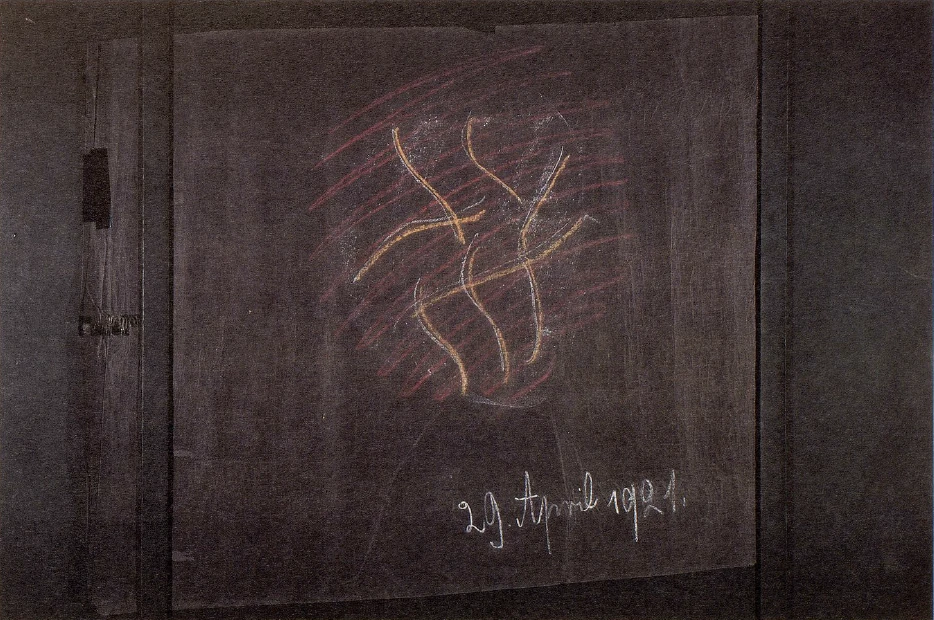
April 29, 1921


In recent days, we have dealt with the development of European civilization and we shall try to add a number of considerations to what has been said. In this, it is always our intention to bring about an understanding of what plays into human life in the present age from the most diverse directions and leads to comprehension of the tasks posed by our time.
When you look at individual human life, it can indeed give you a picture of mankind's development. Nevertheless, you must naturally take into consideration here what has been mentioned in regard to the differences between the development of the individual and the overall development of humanity. I have repeatedly called attention to the fact that whereas the individual gets older and older, mankind as a whole becomes younger and younger, advancing, as it were, to the experience of younger periods of life. While keeping in mind that in this regard the life of the whole human community and that of the individual are direct opposites, at least for the sake of clarification, we can still say that individual human life can be a picture for us of the life of all humanity. If we then view the single human life in this way, we find that a quite specific sum of experiences belongs with each period of life. We cannot teach a six year-old child something we can teach a twelve-year-old; in turn, we cannot expect that the twelve-year-old approaches things with the same comprehension as a twenty-year-old. In a sense, the human being has to grow into what is compatible with individual periods in life. It is the same in the case of humanity as a whole.
True, the individual cultural epochs we have to point out based on insight into humanity's evolution — the old Indian, the old Persian, the Egypto-Chaldean, the Greco-Roman epoch and then the one to which we ourselves belong — have quite specific cultural contents and the whole of mankind has to grow into them. But just as the individual can fall behind his potential of development, so certain segments of mankind can do the same. This is a phenomenon that must be taken into consideration, particularly in our age, since humanity is now moving into the evolutionary state of freedom. It is, therefore, left up to mankind itself to find its way into what this and the following epoch put forward. It is, as it were, left up to human discretion to remain behind what is posed as goals. If an individual lags behind in this regard, he is confronted by others who do find their way properly into their tasks of evolution. They then have to carry him along, in a manner of speaking. Yet, in a certain sense, this can frequently signify a somewhat unpleasant destiny for such a person when he has to become aware that in a certain way he remains behind the others who do arrive at the goal of evolution.
This can also take place in the life of nations. It is possible that some nations achieve the goal and that others remain behind. As we have seen, the goals of the various nations also differ from each other. First of all, if one nation attains its goal and the other falls short of what it is supposed to accomplish, then something is lost that could only have been achieved by this laggard nation. On the other hand, this backsliding nation will adopt much that is really not suitable for it. It appropriates contents it receives by imitating other nations that do attain their goal. Such things do take place in the evolution of mankind, and it is of particular significance for the present age to pay attention to them.
Today, we shall summarize a number of things, familiar to us from other aspects, and throw light on them from a certain standpoint. We know that the time from the eighth pre-Christian century until the fifteenth century A.D. is the time of the development of the intellectual or rational soul among the civilized part of humanity. This development of the intellectual or rational soul begins in the eighth pre-Christian century in southern Europe and Asia Minor. We can trace it when we focus upon the beginnings of the historical development of the Greek people. The Greeks still possess much of what can be termed the development of the sentient soul that was particularly suited to the third post-Atlantean age, the Egypto-Chaldean epoch. That whole period was devoted to the development of the sentient soul.
During those times, human beings surrendered to the impressions of the external world, and through these impressions of the outer world they received at the same time everything they then valued as insights and that they let flow into the impulses of their will. With all their being people were in a condition where they experienced themselves as members of the whole cosmos. They questioned the stars and their movements when it was a matter of deciding what to do, and so on. This experiencing of the surrounding world, this seeing of the spiritual in all details of the outer world, was the distinguishing feature of the Egyptians at the height of their culture. This is what existed in Asia Minor and enjoyed a second flowering among the Greeks. The ancient Greeks certainly possessed this faculty of free surrender to the outer surroundings, and this was connected with a perception of the elemental spirit beings within the outer phenomena.
Then, however, something developed among the Greeks, which Greek philosophers call “nous,” namely, a general world intellect. This then remained the fundamental quality of human soul developments until the fifteenth century. It attained a kind of high point in the fourth Christian century and then diminished again. But this whole development from the eighth pre-Christian century up until the fifteenth century actually developed the intellect. However, if we speak of “intellect” in this period, we really have to disregard what we term “intellect” in our present age. For us, the intellect is something we carry within ourselves, something we develop within ourselves, by virtue of which we comprehend the world. This was not so in the case of the Greeks, and it was still not so in the eleventh, twelfth, and thirteenth centuries, when people spoke about the intellect. Intellect was something objective; the intellect was an element that filled the world. The intellect arranged the individual world phenomena. People observed the world and its phenomena and told themselves: It is the universal intellect that makes one phenomenon follow the other, places the individual phenomena into a greater totality, and so forth. People attributed to the human brain no more than the fact that it shared in this general universal intelligence.
When we work out of modern physics and physiology and speak about light, we say that the light is within us. But even in his naive mind nobody would believe that light is only in our heads. Just as little as today's naive consciousness claims that it is dark outside and light exists only in the human head would a Greek or even a person of the eleventh or twelfth century have said that the intellect was only in his head. Such a person said, The intellect is outside, permeating the world and bestowing order on everything. Just as the human being becomes aware of light owing to his perceptions, so he becomes aware of the intellect. The intellect lights up in him, so to speak.
Something important was connected with this emergence of cosmic intelligence within the human cultural development. Earlier, when the cultural development ran its course under the influence of the sentient soul, people did not refer to a uniform principle encompassing the whole world. They spoke of the spirits of plants, of spirits that regulate the animal kingdom, of water spirits and spirits of the air, and so on. People referred to a multitude of spiritual entities. It was not merely polytheism, the folk religion, that spoke of this multitude. Even in those who were initiates, the awareness was definitely present that they were dealing with a multitude of actual beings in the world outside. Due to the dawn of the rational soul age, a sort of monism developed. Reason was viewed as something uniform that enveloped the whole world. It was not until then that the monotheistic character of religion developed, although a preliminary stage of it existed in the third post-Atlantean epoch. But what we should record scientifically concerning this era — from the eighth pre-Christian to the fifteenth century A.D. — is the fact that it is the period of the developing world intellect and that people had quite different thoughts about the intellect than we have nowadays.
Why did people think so differently about the intellect? People thought differently about the intellect because they also felt differently when they tried to grasp something by means of their intellect. People went through the world and perceived objects through their senses; but when they thought about them, they always experienced a kind of jolt. When they thought about something, it was as if they were experiencing a stronger awakening than they sensed in the process of ordinary waking. Thinking about something was a process still experienced as different from ordinary life. Above all, when people thought about something, they felt that they were involved in a process that was objective, not merely subjective. Even as late as the fifteenth century — and in its aftereffect even in still later times — people had a certain feeling in regard to the more profound thinking about things, a feeling people today do not have anymore. Nowadays human beings do not have the feeling that thinking about something should be carried out in a certain mood of soul. Up until the fifteenth century, people had the feeling that they produced only something evil if they were not morally good and yet engaged in thinking. In a sense, they reproached themselves for thinking even though they were bad persons. This is something we no longer experience properly. Nowadays people believe, In my soul I can be as bad as I want to be, but I can engage in thinking. Up to the fifteenth century, people did not believe that. They actually felt that it was a kind of insult to the divine cosmic intelligence to think about something while in an immoral soul condition. Hence, already in the act of thinking, they saw something real; in a manner of speaking, they viewed themselves as submerged with their soul in the overall cosmic intellect.
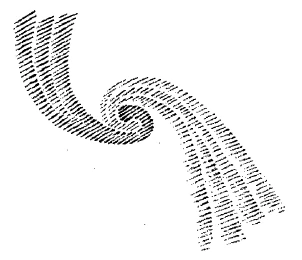
What was the reason for that? This came about because in this period from the eighth pre-Christian century to the fifteenth century A.D., and particularly in the fourth century, human beings predominantly employed their etheric body when they engaged in thinking. It was not that they decided to activate the ether body. But what they did sense — their whole soul mood — brought the etheric body into movement when thinking occurred. We can almost say: During that age, human beings thought with their etheric body. And the characteristic thing is that in the fifteenth century people began to think with their physical bodies. When we think, we do so with the forces the etheric body sends into the physical body. This is the great difference that becomes evident when we look at thinking before and after the fifteenth century. When we look at thinking prior to that time, it runs its course in the etheric body (see drawing, light-shaded crosshatching); in a sense, it gives the etheric body a certain structure. If we look at thinking now, it runs its course in the physical body (dark). Each such line of the ether body calls forth a replica of itself, and this replica is then found in the physical body.


Since that time, what occurs in human beings when they think is, as it were, an impression of the etheric activity as though of a seal on the physical body. The development from the fifteenth to the nineteenth and twentieth centuries was mainly that human beings increasingly have taken their thinking out of the etheric body, that they adhere to this shadow image brought about in the physical body by the actual thought impulses originating in the etheric body. We therefore deal with the fact that in this fifth post-Atlantean epoch people really think with the physical body but that this is merely a shadow image of what was once cosmic thinking; hence, since that time, only a shadow image of cosmic thinking dwells in mankind.
You see, everything that has developed since the fifteenth century, all that developed as mathematics, as modern natural science and so on, is fundamentally a shadow image, a specter of former thinking; it no longer contains any life. People today actually have no idea of how much more alive an element thinking was in former times. In those ancient days, the human being actually felt refreshed while thinking. He was glad when he could think, for thinking was a refreshment of soul for him. In that age, the concept did not exist that thinking could also be something tiring. Human beings could become tired out by something else, but when they could truly think, they experienced this as a refreshment, an invigoration for the soul; when they could live in thoughts, they also experienced something of a sense of grace bestowed on them.
Now, this transition in the soul condition has occurred. In what appears as thinking in modern times, we are confronted with something shadowy. This is the reason for the difficulty in motivating a human being to any action through thinking — if I may put it like this. One can tell people all sorts of things based on thinking, but they will not feel inspired. Yet this is the very thing they must learn. Human beings must become aware of the fact that they possess shadow images in their current thinking. They have to realize that it must not be allowed to remain thus; that this shadow image, i.e. modern thinking, has to be enlivened so that it can turn into Imagination. It becomes evident, for example, in such books as my Theosophy or my An Outline of Occult Science that the attempt is always made to change modern thinking into Imagination, that pictures are driven everywhere into our thinking so that thinking can be aroused to Imagination, hence, to life. Otherwise, humanity would be laid waste completely. We can disseminate arid scholarliness far and wide, but this dry scholarliness will not become inflamed and rouse itself to will-filled action, if Imaginative life does not once more enter into this shadowy thinking, this ghost of thinking which has invaded mankind in recent times.
This is indeed the profound and fateful challenge for modern civilization, namely, that we should realize that, on the one hand, thinking tends to become a shadowy element into which human beings increasingly withdraw and that, on the other hand, what passes over into the will actually turns only into a form of surrender to human instincts. The less thinking is capable of taking in Imagination, the more will the full interest of what lives outside in society be abandoned to the instincts. Humanity of former times, at least in the epochs that bore the stamp of civilization — you have been able to deduce that from the previous lectures — possessed something, out of the whole human organism that was spiritual. Modern human beings only receive something spiritual from their heads; in regard to their will, they thus surrender to their impulses and instincts. The great danger is that human beings turn more and more into purely head-oriented creatures, that in regard to acting in the outer world out of their will, they abandon themselves to their instincts. This then naturally leads to the social conditions that are now spreading in the East of Europe [1] and also infect us here everywhere. This comes about because thinking has become but a shadow image. One cannot stress these things often enough.
It is on the basis of precisely such profound insight that the significant strivings of anthroposophically oriented spiritual science will be understood. Its aim is the shadow image once again become a living being, so that something will be available again to mankind that can take hold of the whole human being. This, however, cannot take place if thinking remains a shadow image, if Imaginations do not enter into this thinking once more. Numbers, for example, will have to be imbued again with life in the way I outlined when I pointed to the sevenfold human being, who is actually a nine-membered being, where the second and the third, the sixth and the seventh parts unite in such a way as to become in each case a unity, and where seven is arrived at when one sums up the nine parts. It is this inner involvement of what was once bestowed on man from within that must be striven for. We have to take very seriously what is characterized in this regard by anthroposophically oriented spiritual science.
From a different direction, an awareness came about of the fact that thinking is becoming shadow like; for that reason, a method was created in Jesuitism that from a certain aspect, brings life into this thinking. The Jesuit exercises are designed to bring life into this thinking. But they accomplish this by renewing an ancient form of life, above all, not by moving in the direction of and working through Imagination, but through the will, which particularly in Jesuit exercises plays an important role. We should realize — yet realize it far too little — how in a community such as the Jesuit order all aspects of the life of soul become something radically different from what is true of ordinary people. Basically, all other human beings of the present possess a different condition of soul than those who become Jesuits. The Jesuits work out of a world will; that cannot be denied. Consequently, they are aware of certain existing interrelationships; at most, such interrelationships are noticed also by some other orders that in turn are fought tooth and nail by the Jesuits. But it is this significant element whereby reality enters into the shadowy thinking that turns a Jesuit into a different kind of person from the others in our modern civilization. These think merely in shadow images and therefore are actually asleep mentally, since thinking no longer takes hold of their organism and does not really permeate their nervous system.
Nobody, I believe, has ever seen a gifted Jesuit who is nervous, whereas those imbued with modern scholarliness and education increasingly suffer from nervousness. When do we become nervous? When the physical nerves make themselves felt. Something then makes itself felt that, from a physical standpoint, has no right at all to make itself felt, for it exists merely to transmit the spiritual. These matters are intimately connected with the wrongness of our modern education. And from a certain standpoint of imbuing thinking with life — a standpoint we must nevertheless definitely oppose — Jesuitism is something that goes along with the world, even though, like a crab, it goes backwards. But at least it moves, it does not stand still, whereas the form of science in vogue today basically does not comprehend the human being at all.
Here, I would like to draw your attention to something. I have already mentioned repeatedly that it is actually painful to witness again and again that modern human beings, who can think all sorts of things and are so very clever, do not stand in a living manner with a single fiber of their lives in the present age, that they do not see what is going on around them, indeed, that they are unaware of what is happening around them and do not wish to participate in it. That is different in the case of the Jesuit. The Jesuit who activates his whole being is well aware of what vibrates through the world today. As evidence, I would like to read to you a few lines from a current Jesuit pamphlet from which you can deduce what sort of life pulsates in it:
For all those who are serious about the fundamental Christian principles, those to whom the welfare of the people is truly a concern of the heart, whose soul was once profoundly touched by the words of the Savior, “Miseror super turbam,” [2] for all those the time has now come when, borne by the ground swell of the Bolshevist storm tide, they can work with much greater success for the people and with the people. There is no room for timidity. Hence, as a matter of policy, we advocate the all out struggle against “capitalism,” against the exploitation of the people and profiteering at their expense, stricter emphasis on the duty to work even for the higher classes, the procurement of decent housing for millions of fellow citizens, even if such procurement necessitates making use of palaces and larger houses, utilization of natural resources and energy gained from water and air for the general welfare, not for trusts and syndicates, enhancement and education of the masses of people, participation by all segments of the people in government and administration, utilization of the concept of the system of soviets for the purpose of developing class representation having equal rights alongside parliamentary mass representation in order to prevent “the isolation of the masses from the state apparatus” as censured justifiably by Lenin ... God has given the goods of the earth to all human beings, not to a few so they can live on the fat of the land while millions languish in poverty, which is degrading both physically and morally ... [Note 1]
You see, this is the fiery mind that does sense something of what is happening. Here is a person who, in the rest of his book, sternly opposes Bolshevism and naturally wishes to have nothing to do with it. But, unlike somebody who has made himself comfortable in a chair today and is oblivious to the conflagration in the world all around him, he does not remain in such a position. Instead, he is aware of what is happening and knows what he wants because he sees what is going on.
People have gone so far as to merely think about the affairs of the world, and otherwise let things run their course. This is what has to be stressed again and again, namely, that the human being has more in him than mere thoughts with which to think about things while really not paying attention to the world's essential nature. As an example we need only indicate the Theosophical Society. It points to the great initiates who exist somewhere, and indeed, it can do so with justification. But it is not a matter of the initiates' existence; what is important is the manner in which those who refer to them speak of them. Theosophists imagine that the great initiates rule the world; in turn, they themselves sit down and produce good thoughts, which they let stream out in all directions. Then they talk of world rule, of world epochs, of world impulses. However, when the point is reached where something real, such as anthroposophy, has to live within the actual course of world events because it could not be otherwise, people find that uncomfortable since then they cannot really remain sitting on their chairs but have to experience what goes on in the world.
It must be strongly emphasized that the intellect has turned into a shadow in humanity, that it was earlier experienced in the etheric body and has now slipped, so to speak, into the physical body where it leads only a subjective existence. However, it can be brought to life through Imagination. Then it leads to the consciousness soul, and this consciousness soul can be grasped as a reality only when it senses the ego descends out of soul-spiritual worlds into incarnation and then passes through the gate of death into soul-spiritual worlds. When this inner soul-spiritual nature of the ego is comprehended, then the shadow image of the intellect can in fact be filled with reality. For it is through the ego that this has to be accomplished.
It is necessary to realize that living thinking exists. For what is it that people know since the fifteenth century? They know only logical thinking, not living thinking. This, too, I have pointed out repeatedly. What is living thinking? I shall take an example close at hand. In 1892, I wrote the The Philosophy of Freedom. This book has a certain content. In 1903, I wrote Theosophy; again, it has a certain content. In Theosophy, mention is made of the etheric body, the astral body, and so on. In Philosophy of Freedom, there is no mention of that. Now those who are only familiar with the logical, dead thinking come and say, Yes, I read the Philosophy of Freedom; from it, I cannot extract any concept of the etheric and astral body; it is impossible; I cannot find these concepts from the concepts contained in the book. But this is the same as if I were to take a small, five-year-old boy and fashioned him into a man of sixty by pulling him upwards and sideways to make him taller and wider!
I cannot put a mechanical, lifeless process in place of something living. But picture the Philosophy of Freedom as something alive — which indeed it is — and then imagine it growing. From it, then develops what only a person who tries to cull or pick out something from concepts will not figure out. All objections concerning contradictions are based on just this, namely, that people cannot understand the nature of living thinking as opposed to the dead thinking that dominates the whole world and all of civilization today. In the world of living things, everything develops from within, A formerly black-haired person who has white hair has acquired the latter not because the hair has been painted white; it has turned white from within. Things that grow and wane develop from within, and so it is also in the case of living thinking. Yet, today, people sit down and merely try to form conclusions, try to sense outward logic. What is logic? Logic is the anatomy of thinking, and one studies anatomy by means of corpses. Logic is acquired through the study of the corpse of thinking. It is certainly justified to study anatomy by means of corpses. It is just as justified to study logic through the corpses of thinking. But one will never comprehend life by means of what has been observed on the corpse!
This is what is important today and what really matters if we wish with all our soul to take part in a living way in what actually permeates and weaves through the world. This side of the matter has to be pointed out again and again, because insofar as the positive world development and evolution of mankind are concerned, we need to invigorate a thinking that has become shadowy. This process of thinking becoming shadow-like reached its culmination in the middle of the nineteenth. century. For that reason, the things that, so to say, beguiled humanity most of them fall into that period. Although in themselves these things were not great, if placed in the right location, they appear great.
Take the end of the 1850's. Darwin's Origin of the Species, [Note 2] Karl Marx's The Principles of Political Economy, [Note 3] as well as Psycho-Physics by Gustav Theodor Fechner, [Note 4] a work in which the attempt is made to discover the psychic sphere by means of outward experiments, were published then. In the same year, the captivating discovery of spectral analysis by Kirchhoff [Note 5] and Bunsen [Note 6] is introduced; it demonstrates, as it were, that wherever one looks in the universe the same materiality is discovered. It is as if everything were being done in the middle of the nineteenth century to beguile human beings into believing that thinking must remain subjective and shadow-like, that it must not interfere in the world outside so that they could not possibly imagine that there might be reason, nous, in the cosmos, something that lives in the cosmos itself.
This is what caused this second half of the nineteenth century to be so unphilosophical. Basically, this is also what made it so devoid of deeds. This is what caused the economic relationships to become more and more complicated while commerce became enlarged into a world economy so that the whole earth in fact turned into one economic sphere, and particularly this shadow-like thinking was unable to grasp the increasingly complex and overwhelming reality. This is the tragedy of our modern age. The economic conditions have become more and more complex, weighty, and increasingly brutal; human thinking remained shadowy, and these shadows certainly could no longer penetrate into what goes on outside in the brutal economic reality.
This is what causes our present misery. Unfortunately, if a person actually believes that he is more delicately organized and has need of the spirit, he may possibly get into the habit of making a long face, of speaking in a falsetto voice and of talking about the fact that he has to elevate himself from brutal reality, since the spiritual basically can be grasped only in the mystical realm. Thinking has become so refined that it has to withdraw from reality, that it perishes right away in its shadowy existence if it tries to penetrate brutal reality. Reality in the meantime develops below in conformity with the instincts; it proliferates and brutalizes. Up above, we see the bloated ideas of mysticism, of world views and theosophies floating about; below, life brutally takes its course. This is something that must stop for the sake of mankind. Thinking must be enlivened; thought has to become so powerful that it need not withdraw from brutal reality but can enter into it, can live in it as spirit. Then reality will no longer be brutal. This has to be understood.
What is not yet understood in many different respects is that a thinking in which universal being dwells cannot but pour its force over everything. This should be something that goes without saying. But it appears as a sacrilege to this modern thinking if a form of thinking appears on the scene that cannot help but extend to all different areas. A properly serious attitude in life should be comprised of the realization: In thinking, we have been dealing with a shadow image, and rightly so, but the age has now arrived when life must be brought once again into this shadow image of thought in order that from this form of thought life, from this inner life of soul, the outer physical, sensory life can receive its social stimulus.
Tomorrow, we shall continue with this.

Translator's Notes:
1. This is a reference to what was happening in Russia.
2. Latin for “I have compassion on the crowd” (Matthew 15:32).


Related post:


The old yoga is passé


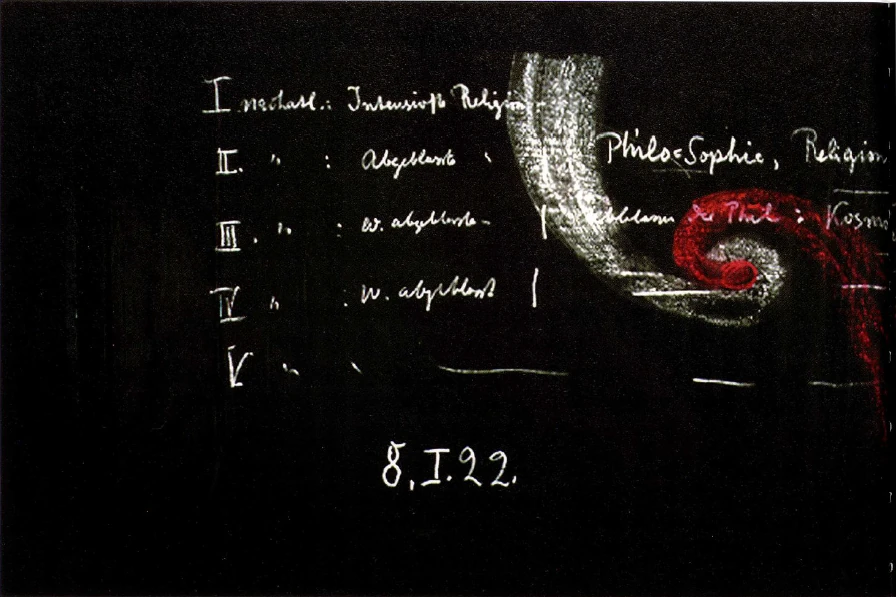
Rudolf Steiner:  "Traditions of bygone ages have always been preserved, in some regions more, in others less. And according to those traditions the peoples of this globe are distinguished from one another. Looking eastwards we find that in later ages something was written down which during the first post-Atlantean period had existed unwritten, something which shines towards us out of the Vedas and their philosophy, something which touches us with its intimacy in the genuine philosophy of yoga. Letting all this work on us in our present-day consciousness, we begin to sense: If we immerse ourselves ever more deeply in these things, then we feel that even in the written works something lives of what existed in primeval times. But we have to add: Because the eastern world still echoes of its primeval times it is unsuited to receiving new impulses. The western world has fewer traditions. At most, certain traditions stemming from the third post-Atlantean period, the age of cosmosophy, are contained in the writings of some secret orders. But they are traditions which are, no longer understood and are only brought before human beings in the form of incomprehensible symbols. But at the same time there is in the west an elemental strength capable of unfolding new impulses for development. We might say that originally the primeval impulses existed. They developed by becoming ever weaker and weaker until, by about the fourth post-Atlantean period, they so to speak lost themselves in themselves, in what became Greek culture as such. Out of that, pointing towards the new, developed the abstract, prosaic sober culture of the Romans. (The lecturer draws on the blackboard). But this in turn must take spirituality into itself; it must, by becoming ever stronger and stronger, be filled with inner spirituality. Here, then, we have the symbol of the spiralling movement of humanity's impulses throughout the ages."


Source:  The Rudolf Steiner Archive  January 8, 1922

Hell is empty and all the devils are here. The Fall of the Spirits of Darkness: Lecture 1 of 14


Ahriman, the Spirit of Materialism


Christ maintaining the balance between Lucifer and Ahriman


Rudolf Steiner, Dornach, Switzerland

September 29, 1917


It is a matter of deep satisfaction to me, as I think you know, to be with you again for a while, for this is the place where we are able to create a visible sign of our intentions and of the will to come closer and closer to a true knowledge of the spirit in our studies and in our work in spiritual science.
The quest for knowledge is intimately bound up with the most inward aspect of the human being, and every now and then we must therefore enquire into the essential nature of our will and intent. In the light of the present situation, woeful as it is, it seems the answer to this question must be a negative one. For more than three years we have seen something spread across the world that I need not discuss in detail, at least to begin with, for we are all aware of it and feel it deeply. The events now taking place are the opposite of our own intentions, which have come to expression in this very building.[ Note 1 ]
Again and again we must try to see clearly which stream of spiritual development we wish to see taken up by humanity, and today we have to say it is the opposite of the stream which has led to the terrible tragedy of these last years. This is something we may call to mind again and again when we give deep and full consideration to the events now raging all over the world. We may say to ourselves that it appears as if time were drawn out and had become elastic, as if the things we remember from before this madness took hold of the world happened not just years but centuries ago.
There will, of course, be many today — as there always have been — who may be said to sleep through the events of the day, people who are not fully awake to what is going on today. But when those who are awake look back on what went through their minds four or five years ago and left an impression, they will feel more or the less the way one does when one lets the mind dwell on an old book or a work of art that was created hundreds of years ago. Events which meant something to us before this madness came on the world now seem to have happened an infinitely long time ago.
Anyone who was awake — through the science of the spirit — was, of course, able to appreciate what was coming even before these events developed. Many of our friends will remember the almost routine answer I gave to questions asked over and over again after my public lectures from the beginning of this century. The question, you may remember, was: “According to the statistics, the world population is increasing; how does this relate to the idea of repeated Earth lives? The increase in population is rapid. How can one reconcile this with the spiritual scientific finding that these are always the same souls?” My answer always had to be: It does look as if the statisticians are right and the world population is increasing; but we have to take a longer view and consider much longer time-spans if we are to do justice to the question. And I would always go on to say that a time may well come, sooner than we may expect, when people discover to their horror that the population can also decrease.
It is not always possible to give plain and simple answers in anthroposophy. People have not yet reached the point where they are able to take truths in the right way, and some things can only be hinted at. Read through the lectures given in Vienna not long before this catastrophe came on our world and you will find the passage where I spoke of the social cancer that is gnawing away at the evolution of humanity. [ Note 2 ] This and other things were said in order to indicate what was going to happen in human evolution and to challenge people to reflect. For we need to reflect on these things if we are really and truly to wake up. We need to be awake and alive for the sake of humanity. If anthroposophy is to fulfill its purpose, its prime task must be to rouse people and make them really wake up. Merely knowing what is going on in the physical world, and knowing the laws that human minds are able to perceive as operative in this world, is no more than being asleep in a higher sense. Humanity is only fully awake when people are able to develop notions and ideas of the world of the spirit. This is all around us, just as air and water, the stars, the sun and the moon are all around us. When we are physically asleep we are wholly given up to the internal processes that go on in the body during the night and have no idea of anything in the physical world around us. We are asleep in exactly the same way when we are wholly given up to the physical environment, and to the world and the laws of the intellect, and have no idea of the world of the spirit that is all around us.
Humanity has made great play of its intellectual progress and scientific achievements in the last few centuries and has been particularly insistent on this at the turn of the nineteenth to the twentieth century. Yet, strangely enough, the unconscious and instinctive life was never more to the fore than it is at this time. Up to the present time this instinctive and unconscious element has increasingly taken hold of the human race. Failure to see the spiritual reality and take account of the element of the spirit is ultimately the cause of this terrible world war. Nor can it be said that through these years — years which have turned into centuries for anyone who is awake in them, as I have said — humanity has learned an adequate lesson from the terrible events around us. Sadly, it has to be said that the opposite is the case.
What is the characteristic element to be found day by day, hour by hour, when we take note of what people think, or rather pretend to think and pretend to want? It is that, fundamentally speaking, no one in the world knows what they want, and no one realizes that people's perfectly justifiable aims, whichever form they may take in the minds of individual nations, would be achieved so much better if they did away with these terrible wars in which so much blood is shed. People do not realize that these terrible events with their bloodshed are really not necessary as a means of helping them to achieve their aims.
These events have a mysterious background, but if you consider some of the things said in our anthroposophical lectures over the years, even if they have only been touched on lightly, you will find perfectly clear statements, also with reference to the most significant of recent events. Consider also what has been said in these very rooms, especially in the last few years, on the character of the Russian people and the difference between the Russians and the peoples of Western and Central Europe. [ Note 3 ] You will find that you need the things which have been said here to gain understanding of an event that appears to have come in with such vehemence. It has burst forth as though it were a karmic vengeance, the inner meaning of which is quite clear, though the word ‘vengeance’ must be taken as a technical term and not at all in a moral sense.
Not only the Russian people, but those of Europe and the whole world, will have to reflect for a long time to come on the events in Eastern Europe, events much more mysterious than we are inclined to think. Something has come to the surface which has been preparing for centuries. The new element wanting to take shape is something completely different from what is actually taking shape. Later generations will be able to use the events which will be taking shape in Eastern Europe over the next decades to demonstrate the difference between maya and reality. For you see, the generations of today are taking what is happening now for the real thing, when this is in fact still waiting in the wings, and they are wrong in taking it for real, for something quite different wants to make its appearance.
The people in the West are ill-equipped to understand what wants to come to the surface. Why are they so ill-equipped? Strange as it may seem to people today — not to you but to the ordinary, average individual; being anthroposophists, you are not ordinary, average people of today — the present age is more than any other age demanding the one thing people least want to have: understanding based on the science of the spirit. Strange as it may sound to the ordinary, average people of today — order will not be created from the chaos of the present time until a sufficiently large number of people are prepared to recognize the truths of that science. Such will be the karma of world history.
If people insist that this war is just like the wars of the past and that we'll be making peace just as peace has been made before — let them talk. They are the people who love maya and do not distinguish between truth and deception. Let them make what may seem like ‘peace’ — order will only arise from the chaos that fills the world today when insight based on the science of the spirit dawns in human minds. You may feel in your heart that it will be a long time before such order comes; you may think it will be a long time before people are prepared to let the dawn of such a science arise — and you will be right. You have to accept that it will be a long time before order arises from the chaos. For it will not come until human hearts understand the realm of the spirit. Order can only come when it is understood how this chaos has arisen.
Chaos has arisen because the reality is considered in an unspiritual way — and the world of the spirit cannot be ignored with impunity. You may think it is enough to live with thoughts and ideas that are wholly derived from the physical world. It is what people generally think today, though this does not make it true. The most completely and utterly wrong idea humanity has ever had is — to put it simply — that the spirits will put up with being ignored. You may consider it egotistical and selfish on their part, but the terminology is different in their world. Egotism or not, the spirits take their revenge if they are ignored here on Earth. This is a law, an iron necessity. One way to characterize the present time is to say that the present human chaos is the revenge of the spirits who have been ignored for too long.
I have often said, both here and elsewhere: A mysterious connection exists between human consciousness and the destructive powers of decline and fall in the universe. Each can, or indeed must, take the place of the other in the following way.
Let us assume there was a time, say during the last twenty or thirty years of the nineteenth century, when people put the same effort into their quest for the things of the spirit as they have put into achieving material knowledge and material actions during those twenty or thirty years. What would have happened if they had endeavored to recognize the world of the spirit and used this to give a character, a foundation, to the physical world, rather than follow mere instinct and chase after more and more knowledge of a kind that has seen its ultimate triumph in the creation of instruments of murder and found its be-all and end-all in people enriching themselves with nothing but material goods? What would have happened if people had sought to gain spiritual knowledge and spiritual impulses for their activities in the social sphere? It would have meant that the powers of destruction were paid off! If people had been more awake and not asleep in the last decades of the nineteenth century there would have been greater awareness and therefore no need for destruction in the first decades of the twentieth century. Spiritual awareness simply has to be greater than purely sensual and material awareness. If this had been the case during the last decades of the nineteenth century, the powers of destruction would not have had to intervene in the early decades of the twentieth century.
This is brought to realization most insistently, and perhaps most cruelly, to the perceptive mind when you meet many of the dead who have entered the world of the spirit either during the last decades of the nineteenth or the first decades of the twentieth century. Many of them have been caught up in the hustle and bustle and search for material values here on Earth and never had the opportunity to let spiritual impulses arouse awareness. Many have gone through the gate of death without even a notion of the thoughts and ideas that point to spiritual impulses. If they had had the opportunity to take in spiritual thoughts and ideas before they went through the gate of death they could have taken these with them. It would have been something they needed after death, but they were not in a position to have it.
Anyone who knows the history of ideas of the last decades of the nineteenth and the first decades of the twentieth century also knows that people actually no longer knew how to use the term ‘spirit’. It has been used to describe all kinds of things, but not the true spirit. Those souls therefore had no opportunity of knowing the spirit whilst here on Earth and they have to take the consequences. Having gone through the gate of death and entered the world of the spirit, they are thirsting for — well, what are they thirsting for, these souls who lived in materialism here? They are thirsting for destructive powers in the physical world! Those are the dues and they must be paid.
There is no easy way of dealing with these things. If we want to know the realities in this sphere, we must acquire a feeling for what the ancient Egyptians called ‘iron necessity’. Terrible as it may be, it was necessary that destruction should spread, for those who had gone through the gate of death were longing for the destructive powers in which they are able to live, seeing they did not receive what was due to them and had been deprived of spiritual impulses while on Earth.
Order cannot arise from the chaos until people are ready to give room to such grave truths in their souls and also let these truths enter into the ideas that apply in the world of politics today. And if these truths sound pessimistic to you and make you think that humanity is still a long way from achieving all that is demanded, as I have indicated, you are indeed right. But let this justifiable pessimism become a challenge to be awake and to try, whatever your place in life may be, to awaken souls so that the science of the spirit can send out its impulses. It cannot yet be done to any great extent, but we must have the real, honest desire to make people consciously aware in such a way that they are able to understand this concrete fact: Longings have arisen in the dead in recent times, and those longings are being met with events which are truly horrifying for those of us who are alive here on the physical plane.
Just think how easy it is for some people to present their friends with an image of the region into which human beings enter when they have gone through the gate of death. Consider the unctuous sermons preached in the churches — with politicians now actually following the example of these sermonizers — and the facile notions people have of the world of the spirit, and you simply cannot help realizing how far removed from reality is the facile vanity of many of today's leading figures. Compare the speeches of such leading figures — their lives show that they do anything but lead and that they are guided by all kinds of forces of which they are completely unconscious and which are not the right forces — compare this with what is really needed at the present time, and you will realize the immense gravity of the present situation.
Right next to our physical world lies another, non-physical or spiritual world, and this has never before influenced our world as intensely as it is doing at the present time. People are not aware of this, however; they do not even notice when things get heart-stoppingly fearsome and terrible. Intensely illuminating words are heard in the world today; they should set vast numbers of people thinking. But people never notice, or at least they do not show it if they do.
Some of you will remember that on a number of occasions in the last three years [ Note 4 ] I have said that when the history of this ‘world war’ will be written in the future — unfortunately present-day critics have not done so, though it could be done fairly easily — it will be impossible to use the method which has produced the legend, the fairy-tale, or call it what you will, which currently goes by the name of ‘history’. This was produced by ‘scholars’ — as the world calls them — sitting in libraries for months, years, and decades and studying diplomatic records in order to write their histories. Inevitably a time will come when most of these histories will have to be pulped. In fact, no one will be able to write the history of these last years by such a method unless they are literally off their heads.
The causes of the chaos will not be apparent to the people who have been writing histories until now, but only to people who have a real feeling for what it means when a miserable individual of our time has to face a court and is forced to sum up the condition he was in at the time by flinging down before the world the lamentable statement: ‘First one thing happened, then another, and that was the moment when I went out of my mind!’ It was Suchomlinov who spoke these pitiful words. [ Note 5 ]
Many people had gone out of their minds at that time, not only Suchomlinov. What kind of moments are these in world events when the only way of describing them is by confessing that one has gone out of one's mind? They are moments when Ahriman and his cohorts gain access to the human race and to human thoughts. For as long as people watch over their conscious minds and their consciousness is not in any way clouded or inactive, neither Ahriman nor Lucifer have access to it. But when it is not fully active and one needs to use the phrase ‘I have gone out of my mind’, that is the moment when Ahriman and his cohorts enter the stage. The things that happen then will not appear in diplomatic records — little of what it says in those records in recent decades makes real sense, by the way. Leaving this aside, the things that have happened in our time and have led to chaos are not merely human actions, but above all the actions of ahrimanic spirits seeking to gain access by reducing human awareness. Some of you know very well that soon after the present catastrophe broke on the world I pointed out that when we speak of the origins of this catastrophe in time to come, we must not do so on the basis of written records; instead we shall have to point to real facts through which ahrimanic spirits gained access to the stage of human events.
These things must be taken in all seriousness; they have to be seen as concrete realities and not merely as abstract formulations. People who do not know anything about it may well laugh when one says that Ahriman gained access to human evolution. They may well laugh at people who say this, but the day will come when world history laughs them to scorn for having laughed at others today.
We certainly cannot say that the judgments, ideas, and notions to be found on the surface in recent years show any degree of maturity. People even failed to understand when eighteen months ago it was pointed out somewhere that something might soon happen of which due note should be taken; it should not be taken lightly. Concrete examples given as an indication of what was likely to happen were never taken in the right way; people were not sufficiently awake in their minds to do so. Now the event has come. And people fail to realize that something is taking root deeply in a certain soil. People are taking it as something which — well, because a certain number of statements take up so many lines, people accept they have a number of statements made in that particular number of lines. They are not at all interested in looking for the roots of such statements, but simply take things at their face value.
I think you know what I mean. You know I am referring to the Papal Note [ Note 6 ] as something I had seen coming for eighteen months. I have looked around a great deal to see if I might not find someone who has expressed their views on this Note, or asked the kind of question that should have come to mind.
Let us remember that the idea of the state as we know it today has been dawning since the sixteenth century. In some parts of the world peculiar people known as ‘historians’ are speaking of states as something which have existed for I do not know how long. But they know little about real history. The present-day idea of a state is no more than four or five hundred years old, and something entirely different existed in earlier times. It is important to know this and be really clear about it. The priestly element, which is to be found in Rome, is indeed older than our modern states. It had its justification in its own day, when it brought about many things in the world. I have tried to find out if people are asking themselves the question: What does it really mean that the modern structures which have developed over four or five centuries cannot find a way of achieving order out of their own resources, and look back to the old priestly element as something to be discussed in the way people generally discuss things today?
It would interest me to know if anyone faced with the question as to whether it is a good idea to skate on ice when it is only one millimeter thick would actually answer in the affirmative. Relative to what we are really dealing with, the concepts on which people base their opinions when a priestly element brings impulses into modern life today are like a one-millimeter layer of ice covering the water. The things people write and say today are like someone skating on ice that is not more than one millimeter in thickness. No one is trying to understand what is happening, no one is prepared to see that what matters is not to take a document and look at the statements it contains, but to know that a statement can mean something totally different, depending on the source from which it comes.
Everywhere today we are faced with the need to warn people in all seriousness to look to the origins, to see how things are related, to look for realities and not to the way things look on the surface. Surely it cannot be that difficult for anyone to admit: I see the way things are, but I do not yet understand them and therefore I will not say anything to interfere. Considering the incredibly superficial level of education, it is not at all surprising when people are able to understand and have an opinion on everything. People find it really difficult to admit that they cannot judge an issue and need to get a basis for their judgment before they give an opinion. In fact, it hardly ever comes to their minds that one has to have a basis on which to form an opinion.
Infinitely much depends on real insight into the driving forces, especially for the immediate future. It has to be realized that the chaos will certainly not be reduced if — speaking hypothetically — the churches were to succeed in establishing even the initial stages of apparent order. The worst error we can fall into would be to say: It does not matter where peace comes from, even if it is from the Pope. The point is, it may actually cause no harm at all to have peace initiated by the Pope; the question is how those who are involved see the issue.
Again and again we need to be really clear in our minds that the present time is literally challenging us every hour, indeed every minute, to wake up. Anthroposophy as a science of the spirit can only be understood by those who are able to grasp that humanity is being asked to make a clear decision. Either the spirit is understood or the chaos continues. A papered-over chaos would be no better than the carnage we have today. If we are unable to come up with anything better than materialism and again materialism, even a heightened materialism, in the next few years, and if it were to happen that the events of the last three years, to which humanity has failed to wake up and take notice, were to lead to a new rush for material goods — many people are longing for this as something that comes with peace — then souls would once again go through the gate of death and thirst for destruction here on Earth. There would be no end to the destruction.
All it needs is to get an idea, a feeling, an inner impulse for the need to turn to the things of the spirit! Then we shall progress, depending on the extent to which this is achieved. Anyone who wants to gain a little understanding of the present position, and looks at our time in the light of the serious truths we have been considering, must develop a reasonable degree of feeling for all the terrible, hopelessly commonplace and superficial things that are now being written and said in this world.
Imagine a band of children smashing up all the pots and plates, glasses, and everything in the house. The adults who see this happening are considering how to stop it, for the children keep running to the larder and all over the house to find more things to smash. Finally the adults have an idea as to how they can stop it. A number of people who are watching, people who actually consider themselves to be the teachers of these children, find a solution: They take care that everything breakable is collected and smashed to pieces — and that, they think, should put an end to it all! I do not know how many people would not consider those teachers to be fools. This is the kind of situation where people would see the truth. Yet there are people who consider themselves to be wise and who say to the whole world: Carnage must continue until peace comes; everything has to be broken, so there will be nothing left to smash in the world. This is considered wisdom. Go on murdering people for as long as you can and you will stop the murder. This is wisdom!
For anyone who has even a spark of logic it is no longer wisdom when the teacher says to a band of children: To make sure nothing else gets smashed up, I will quickly get people to collect all other breakable objects and smash them; I reckon nothing else will get smashed after that. Why do people call this foolishness and the other thing political foresight? Because people's thinking stops at the very point where it should be most intense, which is where their thoughts relate to great questions of destiny.
We shall continue with this tomorrow, and consider some serious spiritual truths.


Source: The Rudolf Steiner Archive

Wednesday, October 1, 2025

The course of human spiritual evolution. What the world needs now is anthroposophy


Rudolf Steiner, Dornach, Switzerland

January 8, 1922


Today we shall consider the differentiations in mankind from another viewpoint, namely that of history. With the express aim of promoting an understanding for the present time we shall look at human evolution starting at a point immediately following the catastrophe of Atlantis. If human evolution can be considered to encompass any evolution of civilization, then we shall find the first decisive period of development to be the culture epoch of ancient India. In my book Occult Science1 you will find this culture of ancient India described from a particular viewpoint. Though the Vedas and Indian philosophy are rightly admired, they are actually only echoes of that ancient culture, of which there exist no written records. In the words of today we have to describe the culture of ancient India as a religious culture in the highest sense. To understand this properly we shall have to discuss it more thoroughly.

The religious element of ancient Indian culture included what we today would call science and art. The total spiritual life of the whole human being was encompassed by this culture for which the most pertinent description is that it was a religious culture. This religious culture generates the feeling in human beings that in the depths of their being they are linked with a divine, spiritual world. This feeling was developed so intensely that the whole of life was illumined by it. Their clearer states of consciousness, which were preparations for today's waking state, and also their dream consciousness, which became lost in our chaotic dream and sleep life as evolution progressed, were both states of consciousness filled with an instinctive awareness of the links between the human realm and the divine, spiritual realm.

But our idea of religion today is of something rather general. The concept of religion makes us think too strongly of something general, something abstract and rather detached from everyday life. For the people about whom we are speaking, however, religion and the content they associated with it gave them a knowledge expressed in pictures, a knowledge of the being of man and an extensive picture knowledge of the structure of the universe.

We have to imagine, though, that what lived in these people's view of the world, by way of a picture knowledge of the structure of the universe, in no way resembled our modern knowledge of astronomy or astrophysics. Our astronomy and astrophysics show us the mechanics of the universe. The ancient Indian people had a universe of picture images populated with divine, spiritual beings. There was as yet no question, in the present sense, of any external, merely mechanical rules governing the relationships between heavenly bodies or their relative movements. When those people looked up to the starry heavens they saw in the external constellations and movements of the stars only something perfectly familiar to them in their picture consciousness. It was something which may be described as follows.

Suppose we were to see a vivid, lively scene with bustling crowds and people going about all kinds of business, perhaps a public festival with much going on. Then we go home, and next morning the newspaper carries a report about the festival we ourselves attended. Our eyes fall on the dead letters of the printed page. We know what they mean and when we read the words they give us a weak, pale idea of all the lively bustle we experienced the day before. This can be compared with what the ancient Indian people saw in their instinctive vision and in relation to this what they saw in the constellations and movements of the stars. The constellations and movements of the stars were no more than written characters, indeed pale written characters. If they had copied down these characters on paper, they would have felt them to be no more than a written description of reality.

What these people saw behind the written characters was something which they not only came to know with their understanding but also to love with their feelings. They were unable merely to take into their ideas all that they grasped in pictures about the universe; they also developed lively feelings for these things. At the same time they developed a permanent feeling that whatever they did, even the most complicated actions, was an expression of the cosmos filled with divine spiritual weaving. They felt their limbs to be filled with this divine, spiritual cosmic weaving. They felt their understanding to be filled with this divine spiritual weaving, and likewise their courage and their will. Thus, speaking of their own deeds, they were able to say: Divine, spiritual beings are doing this. And since in those ancient times people knew very well that Lucifer and Ahriman are also to be found among those divine, spiritual beings, so were they aware that because divine, spiritual beings worked in them, they were therefore capable of committing evil as well as good deeds.

With this description I want to call up in you an idea of what this religion was like. It filled the whole human being, it brought the whole human being into a relationship with the abundance of the cosmos. It was cosmic wisdom and at the same time it was a wisdom which revealed man. But then progress in human evolution first caused the most intense religious feelings to pale. Of course, religion remained, in all later ages, but the intensity of religious life as it was in this first Indian age paled. First of all what paled was the feeling of standing within the realm of divine, spiritual beings with one's deeds and will impulses. In the ancient Persian age, the second post-Atlantean cultural epoch, people still had this feeling to some extent, but it had paled. In the first post-Atlantean epoch this feeling was a matter of course. In the second cultural blossoming, the ancient Persian time, the profoundest, most intense religious feelings paled, so human beings had to start developing something out of themselves in order to maintain their link with the cosmic, divine spiritual realm in a more active manner than had at first been the case. So we might say: The first post-Atlantean period was the most intensely religious of all. And in the second period religion faded somewhat, but human beings had to develop something by inner activity , something which would unite them once more with the cosmic beings of spirit and soul.

Of all the words we know, there is one we could use to describe this, although it was coined in a later age. It comes from an age which still possessed an awareness of what had once been a part of human evolution in ancient times. When an ancient Indian looked up to the heavens, he sensed the presence of individual beings everywhere, one divine spiritual being next to another—a whole population of divine spiritual beings. But this faded, so that what had been individualized, what had been individual, divine, spiritual beings faded into a general, homogeneous spiritual cosmos. Think of the following picture: Imagine a swarm of birds close by. You see each individual bird, but as the swarm flies further and further away it becomes a black blur, a homogeneous shape. In the same way the divine spiritual cosmos became a blurred image when human beings moved spiritually away from it.

The ancient Greeks still had an inkling of the fact that once, in the distant past, something like this had been at the foundation of what human beings saw in the spiritual world. Therefore they took into their language the word ‘sophia’. A divine, spiritual cosmos had once, as a matter of course, poured itself into human beings and had taken human beings into itself. But now man had to approach what he saw from a spiritual distance—a homogeneous cosmos—by his own inner activity. This the Greeks, who still had a feeling for these things, called by the expression: ‘I love’; that is: ‘philo’. So we can say that in the second post-Atlantean period, that of ancient Persia, the initiates had a twofold religion where earlier on religion had been onefold. Now they had philosophy and religion. Philosophy had been achieved. Religion had come down from the more ancient past, but it had paled.

Passing now to the third post-Atlantean period, we reach a further paling of religion. But we also come to a paling of philosophy. The actual, concrete process that took place must be imagined as follows. In ancient Persian times there existed this homogeneous shape made up of cosmic beings and this was felt to be the light that flooded through the universe, the primeval light, the primeval aura, Ahura Mazda. But now people retreated even further from this vision and began in a certain way to pay more attention to the movements of the stars and of the starry constellations. They now sensed less in regard to the divine, spiritual beings who existed in the background and more in regard to the written characters. From this arose something which we find in two different forms in the Chaldean wisdom and the Egyptian wisdom, something which comprised knowledge about the constellations and the movements of the stars. At the same time, the inner activity of human beings had become even more important. They not only had to unite their love with this divine Sophia who shone through the universe as the primeval light, but they had to unite their own destiny, their own position in the world, with what they saw within the universe in a cosmic script provided by the starry constellations and the starry movements. Their new achievement was thus a Cosmo-Sophia. This cosmosophy still contained an indication of the divine, spiritual beings, but what was seen tended to be merely a cosmic script expressing the deeds of these beings. Beside this there still existed philosophy and religion, which had both faded.

In order to understand this we must realize that what we today call philosophy is naturally only an extremely weak, pale shadow image of what was still felt to be more alive in the Mysteries of the third post-Atlantean period and what in an even paler form the Greeks later called philosophy. In the culture of the third post-Atlantean period we see everywhere expressions of these three aspects of the human spirit: a cosmosophy, a philosophy and a religion.2 And we only gain proper pictures of these when we know we have to remind ourselves that right up to this time human beings lived in their soul life more outside the earthly realm than within it. Looking for instance at the Egyptian culture from this point of view—and it was even more pronounced in the Chaldean—we see it rightly only if we remind ourselves that those who had any part in this culture indeed took the most intimate interest in the constellations of the stars as evening approached. For example they awaited certain manifestations from Sirius, they observed the planetary constellations and applied what they saw there to the way the Nile gave them what they needed for their earthly life. But they did not speak in the first instance of the earthly realm. This earthly realm was one field of their work, but when they spoke of the field they were tilling they did so in a way which related it to the extraterrestrial realm. And they named the varying appearances of the patch of earth they inhabited in accordance with whatever the stars revealed as the seasons followed one upon another. They judged the earth in accordance with the heavens. From the soul point of view, daytime brought them darkness. Light came into this darkness when they could interpret what the day brought in terms of what the starry heavens of the night showed them.

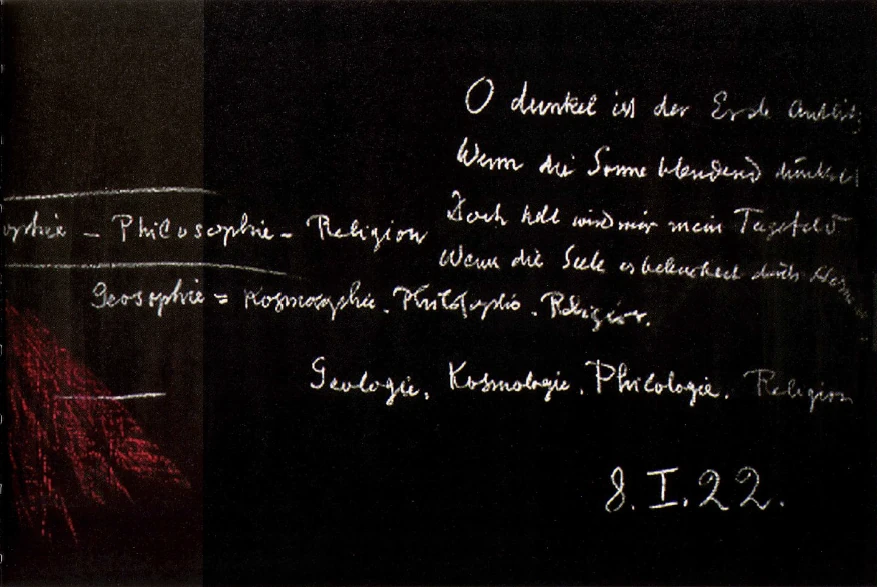
What people in those times saw might be expressed thus: The face of the earth is dark when the sun obscures my vision with dazzling brightness; but light falls on the field of my daily work when my soul shines upon it through starry wisdom.

Writing down a sentence like this gives us a sense for what the realm of feeling in this third post-Atlantean period was like. From this in turn we sense how those who still stood in the after-echoes of such a realm of feeling could say to the Greeks, to those who belonged to the fourth post-Atlantean cultural period: Your view of the world, indeed your whole life, is childlike, for you have knowledge only of the earth. Your ancestors in ancient times knew how to illumine the earth with the light of the heavens, but you live in the darkness of earth.

The ancient Greeks experienced this darkness of earth as something light. Their inclination was gradually to overcome and transform the older cosmosophy. So, as everything that looked down from the broad heavens became paler still, they transformed the older cosmosophy into a geosophy. Cosmosophy was nothing more than a tradition for them, something they could learn about when they looked back to those who had passed it down to them from earlier times.

Pythagoras, for instance, stood at the threshold of the fourth post-Atlantean period when he journeyed to the Egyptians, to the Chaldean and even further into Asia in order to gather whatever those who lived there could give him of the wisdom of their forefathers in the Mysteries, whatever they could give him of what had been their cosmosophy, their philosophy and their religion. And what was still comprehensible for him was then just that: cosmosophy, philosophy, religion.

However, there is something we today take far too little into consideration: This geosophy of the ancient Greeks was a knowledge, a wisdom which, in relation to the earthly world, gave human beings a feeling of being truly connected with the earth, and this connection with the earth was something which had a quality of soul. The connection with the earth of a cultured Greek had a quality of soul. It was characteristic for the Greeks to populate springs with nymphs, to populate Olympus with gods. All this points, not to a geology, which envelops the earth in nothing but concepts, but to a geosophy in which spiritual beings are livingly recognized and knowingly experienced. This is something which mankind today knows only in the abstract. Yet right into the fourth century AD it was still something that was filled with life.

Right into the fourth century AD a geosophy of this kind still existed. And something of this geosophy, too, came to be preserved in tradition. For instance we can only understand what we find in the work of Scotus Erigena,3 who brought over from the island of Ireland what he later expressed in his De divisione naturae, if we take it as a tradition arising out of a geosophical view. For in the fifth post-Atlantean period, which was in preparation then and which began in the fifteenth century, geosophy, too, paled. There then began the era in which human beings lost their inner connection with, and experience of, the universe. Geosophy is transformed, we might say, into geology. This is meant in the widest possible sense and comprises not only what today's academic philosophy means by the term. Cosmosophy was transformed into cosmology. Philosophy was retained but given an abstract nature—which in reality ought to be called philology, had this term not already been taken to denote something even more atrocious than anything one might like to include in philosophy.

There remains religion, which is now totally removed from any real knowledge and basically assumed by people to be nothing more than tradition. People of a nature capable of being creatively religious are no longer a feature of civilized life in general in this fifth post Atlantean period. Look at those who have come and gone. None have been creatively religious in the true sense of the word. And this is only right and proper. In the preceding epochs, in the first, second third and fourth post-Atlantean periods, there were always those who were creatively religious, personalities who were creative in the realm of religion, for it was always possible to bring down something from the cosmos, or at least to bring something up out of the realm of the earth. So in the Greek Mysteries—those called the Chthonian Mysteries in contrast to the heavenly Mysteries—which brought up their inspiration out of the depths of the earth in various ways—in these Mysteries geosophy was chiefly brought into being.

By entering into the fifth post-Atlantean period and standing full within it, human beings were thrown back upon themselves. The now made manifest what came out of themselves, ‘-logy ‘, the lore the knowledge out of themselves. Thus knowledge of the universe becomes a world of abstractions, of logical concepts, of abstract ideas. Human beings have lived in this world of abstract ideas since the fifteenth century. And with this world of abstract ideas, which they summarize in the laws of nature, they now seek to grasp out of themselves what was revealed to human beings of earlier times. It is quite justified that this age no longer brings forth any religiously creative natures, for the Mystery of Golgotha falls in the fourth post-Atlantean period, and this Mystery of Golgotha is the final synthesis of religious life. It leads to a religion that ought to be the conclusion of earthly religious streams and strivings. With regard to religion, all subsequent ages can really only point back to this Mystery of Golgotha.

So the statement, that since the beginning of the fifth post-Atlantean period it is no longer possible for religiously productive individuals to appear, is not a criticism or a reprimand aimed at historical development. It is a statement of something positive because it can be justified by the occurrence of the Mystery of Golgotha.

In this way we conjure up before our eyes the course of human evolution with regard to spiritual streams and spiritual endeavours. In this way we can see how it has come about that we stand today in the midst of something that is, basically, no longer connected with the world about us but has come out of the human being, something in which the human being is productive and must become ever more productive. By further developing all these abstract things human beings will ascend once more through Imaginations to a kind of geosophy and cosmosophy. Through Inspiration they will deepen cosmosophy and ascend to a true philosophy, and through Intuition they will deepen philosophy until they can move towards a truly religious view of the world which will once more be able to unite with knowledge.

It is necessary to say that today we are only in the very first, most elementary beginnings of this progress. Since the final third of the nineteenth century there has shone into the earthly world from the spiritual world something which we can take to be a giving-back of spiritual revelations. But even with this we stand at the very beginning, a beginning which gives us a picture with which to characterize the attitude brought by external, abstract culture towards the first concrete statements that come from the spiritual world. When the representatives of current recognized knowledge hear what we have to say about the spiritual world, the understanding they bring to bear on what we say is of a kind that it can only be called a non-understanding. For it can be compared with the following: Suppose I were to write a sentence on this piece of paper, and suppose someone were to try to understand what I had written down by analysing the ink in which it is written. When our contemporaries write about Anthroposophy it is like somebody analysing the ink of a letter he has received. Again and again we have this impression. It is a picture very close to us, considering that we took our departure from a description of how, for human beings, in early post-Atlantean times even the starry constellations and starry movements were no more than a written expression for what they experienced as the spiritual population of the universe.

Such things are said today to a certain number of people in order to give them the feeling that Anthroposophy is not drawn from some sort of fantastic underworld but from real sources of knowledge, and that it is therefore capable of understanding the human beings of the earth to the very roots of their nature. Anthroposophy is capable of throwing light on today's differentiation of human beings into those of the West, of the middle realm and of the East, in the way mentioned yesterday. It is also capable of throwing light on differentiations which have existed in human evolution during the course of time. Only by connecting everything we can know about the differentiations according to regions of the earth with what we can know about how all this has come about can we gain an understanding of what kind of human beings inhabit our globe today.

Traditions of bygone ages have always been preserved, in some regions more, in others less. And according to those traditions the peoples of this globe are distinguished from one another. Looking eastwards we find that in later ages something was written down which during the first post-Atlantean period had existed unwritten, something which shines towards us out of the Vedas and their philosophy, something which touches us with its intimacy in the genuine philosophy of yoga. Letting all this work on us in our present-day consciousness, we begin to sense: If we immerse ourselves ever more deeply in these things, then we feel that even in the written works something lives of what existed in primeval times. But we have to add: Because the eastern world still echoes of its primeval times it is unsuited to receiving new impulses.

The western world has fewer traditions. At most, certain traditions stemming from the third post-Atlantean period, the age of cosmosophy, are contained in the writings of some secret orders. But they are traditions which are, no longer understood and are only brought before human beings in the form of incomprehensible symbols. But at the same time there is in the west an elemental strength capable of unfolding new impulses for development.

We might say that originally the primeval impulses existed. They developed by becoming ever weaker and weaker until, by about the fourth post-Atlantean period, they so to speak lost themselves in themselves, in what became Greek culture as such. Out of that, pointing towards the new, developed the abstract, prosaic sober culture of the Romans. (The lecturer draws on the blackboard). But this in turn must take spirituality into itself; it must, by becoming ever stronger and stronger, be filled with inner spirituality. Here, then, we have the symbol of the spiralling movement of humanity's impulses throughout the ages.

This symbol has always stood for important matters in the universe. If we have to speak of an atomistic world, we should not imagine it in the abstract way common today. We should imagine it in the image of this spiral, and this has often indeed been done. But on the greatest scale, too, we have to see this spiralling movement. Today I consider that we have arrived at it in a perfectly elementary manner by way of a concrete consideration of the course of human spiritual evolution.


Source: The Rudolf Steiner Archive