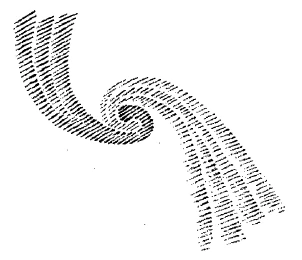
Rudolf Steiner: "Traditions of bygone ages have always been preserved, in some regions more, in others less. And according to those traditions the peoples of this globe are distinguished from one another. Looking eastwards we find that in later ages something was written down which during the first post-Atlantean period had existed unwritten, something which shines towards us out of the Vedas and their philosophy, something which touches us with its intimacy in the genuine philosophy of yoga. Letting all this work on us in our present-day consciousness, we begin to sense: If we immerse ourselves ever more deeply in these things, then we feel that even in the written works something lives of what existed in primeval times. But we have to add: Because the eastern world still echoes of its primeval times it is unsuited to receiving new impulses. The western world has fewer traditions. At most, certain traditions stemming from the third post-Atlantean period, the age of cosmosophy, are contained in the writings of some secret orders. But they are traditions which are, no longer understood and are only brought before human beings in the form of incomprehensible symbols. But at the same time there is in the west an elemental strength capable of unfolding new impulses for development. We might say that originally the primeval impulses existed. They developed by becoming ever weaker and weaker until, by about the fourth post-Atlantean period, they so to speak lost themselves in themselves, in what became Greek culture as such. Out of that, pointing towards the new, developed the abstract, prosaic sober culture of the Romans. (The lecturer draws on the blackboard). But this in turn must take spirituality into itself; it must, by becoming ever stronger and stronger, be filled with inner spirituality. Here, then, we have the symbol of the spiralling movement of humanity's impulses throughout the ages."


 Posts
Posts


No comments:
Post a Comment