Tuesday, September 29, 2020

Spirit Triumphant: Flame!


So that the Michael impulses can become reality, let us become one with the flame that is enkindled today. These impulses cannot become reality without flames. But to live and work out of the flames of enthusiasm, we ourselves must become the flame. Flame is the only thing that is not consumed by flame. When we feel ourselves becoming flames that cannot be burned by flames, we can afford to leave our physical hearts behind like empty sacks, because we will possess etheric hearts, hearts that understand that humankind is entering a new age and a life of spirituality.” 

~Rudolf Steiner, from “The Life of the World Must Be Constructed Anew from the Ground Up”, Arnheim, July 20, 1924. Found in “Youth and the Etheric Heart”, GA 217a


The pangs of love


from chapter 29 of the autobiography of St. Teresa of Avila:


Beside me, on the left hand, appeared an angel in bodily form.... In his hands I saw a great golden spear, and at the iron tip there appeared to be a point of fire. This he plunged into my heart several times so that it penetrated to my entrails. When he pulled it out, I felt that he took them with it, and left me utterly consumed by the great love of God. The pain was so severe that it made me utter several moans. The sweetness caused by this intense pain is so extreme that one cannot possibly wish it to cease, nor is one's soul then content with anything but God. This is not a physical but a spiritual pain, though the body has some share in it—even a considerable share. So gentle is this wooing which takes place between God and the soul that if anyone thinks I am lying, I pray God, in His goodness, to grant him some experience of it.


Spiritual Invincibility: What the archangel Michael expects of us


Matthew 16:17-19

And Jesus answered and said unto him, Blessed art thou, Simon Barjona: for flesh and blood hath not revealed it unto thee, but my Father which is in heaven.
And I say also unto thee, That thou art Peter, and upon this rock I will build my church; and the gates of hell shall not prevail against it.
And I will give unto thee the keys of the kingdom of heaven: and whatsoever thou shalt bind on earth shall be bound in heaven: and whatsoever thou shalt loose on earth shall be loosed in heaven.


The Altar of Humanity
 The Solar Plexus
The Manipura Chakra
The Stronghold of Manu

Rudolf Steiner:


"This ability to rise to the point at which thoughts about spirit can grip us as powerfully as can anything in the physical world, this is Michael power. It is confidence in the ideas of spirit — given the capacity for receiving them at all — leading to the conviction: I have received a spiritual impulse, I give myself up to it, I become the instrument for its execution. First failure — never mind! Second failure — never mind! A hundred failures are of no consequence, for no failure is ever a decisive factor in judging the truth of a spiritual impulse whose effect has been inwardly understood and grasped. We have full confidence in a spiritual impulse, grasped at a certain point of time, only when we can say to ourself: My hundred failures can at most prove that the conditions for realizing the impulse are not given me in this incarnation; but that this impulse is right I can know from its own nature. And if I must wait a hundred incarnations for the power to realize this impulse, nothing but its own nature can convince me of the efficacy or impotence of any spiritual impulse. 


If you will imagine this thought developed in the human heart and soul as great confidence in spirit, if you will consider that man can cling firm as a rock to something he has seen to be spiritually victorious, something he refuses to relinquish in spite of all outer opposition, then you will have a conception of what the Michael power, the Michael being, really demands of us; for only then will you comprehend the nature of the great confidence in spirit. We may leave in abeyance some spiritual impulse or other, even for a whole incarnation; but once we have grasped it we must never waver in cherishing it within us, for only thus can we save it up for subsequent incarnations. And when confidence in spirit will in this way have established a frame of mind to which this spiritual substance appears as real as the ground under our feet — the ground without which we could not stand — then we shall have in our heart and soul a feeling of what Michael really expects of us."


Rudolf Steiner:  "Michael will point out the right road with respect to the world which lies about man, for him to know and be active in it."


"The Christian Knight" by Albrecht Dürer

Rudolf Steiner:  "The famous image of The Christian Knight, or as it is often called, Knight, Death, and the Devil. Please note how this copperplate engraving grew entirely out of its era. Because if you put this image up next to the lines that I cited earlier from Goethe's Faust:


    I've more sense, to be sure, than the learned fools,
    The masters and pastors, the scribes from the schools;
    No scruples to plague me, no irksome doubt,
    No hell-fire or devil to worry about...


then you find yourself with this whole character who need fear neither death nor the devil, but instead strikes out into the world. And this is how he is to be depicted, the Christian knight who rebels utterly against the doctors, masters, scribes, and clerics brought into his sphere, that knight who must make his way in the world fearing neither death nor the devil that stand in his way and that he must simply push aside in order to continue his journey. The title of the engraving really should be The Christian Knight because death and the devil are simply standing on the path; but he steps over them, passing them by without paying them any mind."


 "Do not go where the path may lead. Go instead where there is no path and leave a trail."  — Thoreau 

"In the karma of every single Anthroposophist is written: Become a person of initiative; observe whether out of the hindrances of your body or any other hindrances that thwart you, you do not discover initiative to be the center of your being. Suffering and joy for you will actually depend on whether or not you can discover personal initiative. As if in letters of gold, there should always stand before the soul of the Anthroposophist: 'Initiative is part of your karma; much of what meets you in life will depend on whether you can bring this initiative to consciousness.'"  —Rudolf Steiner


Rhinoceros, woodcut by Albrecht Dürer

From the Sutta-Nipata:


Go forward without a path,
Fearing nothing, caring for nothing,
Wandering alone, like the rhinoceros!
Even as a lion, not trembling at noises,
Even as the wind, not caught in a net,
Even as the lotus leaf, untainted by water,
Do thou wander alone, like the rhinoceros!


Rudolf Steiner:  "Spirit Triumphant! Flame through the impotence of faltering, fainthearted souls! Burn up egoism, kindle compassion, so that selflessness, the lifestream of humanity, may flow as the wellspring of spiritual rebirth!"


Related posts: 
http://martyrion.blogspot.com/2018/08/peace-as-strength.html
http://martyrion.blogspot.com/2018/01/the-cry-of-human-heart-is-how-can-i-help.html

Monday, September 28, 2020

The Book of Revelation and the Work of the Priest. Lecture 3 of 18


Rudolf Steiner, Dornach, Switzerland, September 7, 1924

Yesterday we referred to. the important turning point in human evolution at the beginning of the third mystery epoch, when man's participation in the cosmic things in transubstantiation and in the act of consecration of man began to occur in the astral body. This is that member of the human being which leaves the physical body as far as ordinary consciousness is concerned, and which is unreceptive for percepts from the environment during the time of the separation.
Let's try to get a clear idea of how this astral body functions in present-day man. It is the member which transmits the thoughts which enable us to understand the world. For thoughts about one's environment disappear as soon as one's astral body leaves the physical and etheric bodies.
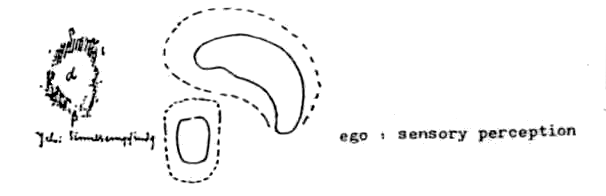
We can round out this idea if we realize that the ego-organization — the actual ego in man as he is today — is the receiver of sense impressions. However, the latter are obliterated when the ego-organization leaves the physical and etheric bodies.
So that we can say: here are the physical and etheric bodies of the human being, and during sleep the astral body and ego-organization are outside. The ego-organization gives us our sense percepts and sensations when we are awake. There is no sense perception during sleep, because the ego-organization is not in the physical and etheric bodies and because the ego is not receptive for impressions from the environment during that time. Likewise, the astral body gives us thoughts when it is in the physical and etheric bodies, but when it is outside it is not sensitive to things in the world and it gives us no impressions.
However, it was this astral body which became receptive for what I described to you, during the third mystery epoch when man was to connect himself with divine, spiritual beings through cultic words and through everything the priest did in the way of preparatory exercises. It became receptive for the elaboration of the transubstantiation in itself during communion, and after the transubstantiation was elaborated it became receptive for apocalyptic things.
The same kind of thing has to happen in the ego-organizations of people from the present epoch on. Even though this ego-organization can only experience sense impressions in ordinary consciousness, it must be constituted in such a way that it experiences transubstantiations and in such a way that it can participate in apocalyptic things through the latter.
People can really become receptive for these things today, that is, someone can really become a priest if he takes in ideas which are true spiritual copies of the supersensible world. Therewith we have described the esoteric or inner connection between the esotericism which rightfully exists today and what must live in a priest's soul. We have described what can make the Christian Community a bearer of an important part of the new mysteries. We must only consider how the Anthroposophy which is approaching human beings today is really constituted.
I have often used an analogy. I said that people are inclined to accept things which are supported by outer perceptions and experiments today, but they don't want to accept things which are not supported in this way. However, anyone who has this attitude is like a person who says: every rock on earth must be supported so that it won't fall down and therefore the planets in the universe must also be supported so that they won't fall down. Of course, since it's taught in a traditional and authoritative way, people believe that the planets in the universe mutually carry each other without supports. However, many people doubt that Anthroposophical truths support and carry each other, and that they don't have to be supported by outer observations and experiments.
As soon as one sees that Anthroposophical truths are valid because they all support each other, so that the truths mutually support each other, in that moment one will stop saying: I can't see anything in the spiritual world yet and therefore I can't understand the content of Anthroposophy. Instead one will begin to understand Anthroposophy through the fact that its truths mutually support each other, and one will then work one's way further into it.
The main thing which can and must put this body of priests on its inner path today is the task of penetrating what is given about the spiritual world. If it does tread this path, we should make it clear to ourselves that the attitude of soul which someone gets into if he takes possession of Anthroposophy in an honest way enables him to approach the Apocalypse. It enables one to approach it in such a way that one can say: It's true that the Apocalypse exists, but if I let it work upon me, each one of its images or Imaginations becomes united with my own ego. And then comes the moment where this Apocalypse can be a creation of the human ego and not just a personal experience. However, we must try to approach the Apocalypse in an Anthroposophical way. There's no other context which leads to it today.
We will now try to grasp a few of the main points in the Apocalypse in a spiritual way, if I may put it that way. “I am Alpha and Omega.” Expressed in an ancient form: one only understands alpha or A if one knows that a sound or letter as a component of a word was not the abstract, separate and meaningless thing back then, that we experience today. A sound was something which deserved to have a name. Mankind has treated The sounds of language which really enclose a great mystery in a peculiar way.
Mankind has treated the sounds of language in the way that a policeman treats a criminal. A long time ago it numbered the letters in the way that we give numbers to criminals when they are put into their cells, so that they lose their names and get numbers. Sounds have lost their identity through the numbering process. This is a pictorial way of putting it, but a true one nevertheless.
For if we go back before the late Hebraic period when they first gave numbers to the sounds, we find that mankind was fully aware that it is quite right for a sound to have a name, and that one can say alpha to it because it is a divine, supersensible being. If we want to find out what this first letter alpha of the so-called alphabet really is, we will have to go through a kind of spiritual development or conceptual development.
You know that Anthroposophy goes back in earth evolution through Moon, Sun to Saturn. It tries to dig up things in the world which are connected with the evolution of man. We find the first cosmic human germ on Saturn, which became the present human body after manifold transformations during Sun, Moon and earth. Man was present on Saturn in his first, germinal form.
For anyone who honestly and seriously wants to see the true state of affairs in this area, it's no doubt quite important to ask what men really experienced on old Saturn. Man experienced successive conditions of warmth. Man absorbed various states of warmth and cold. He existed in states which really only told him something about warmth conditions in the cosmos, for although they also told him many spiritual things, they only disclosed a limited region of the spirit through differentiated warmth and cold.
If we go on from Saturn to Sun, we find that man's organism has become differentiated. During Sun existence man lives in a physical body which is differentiated into warmth ether and air. Differentiation also occurs within as man becomes filled with a richer content. He not only perceives the differentiated warmth like on old Saturn, but something like an inner life emerges. Man perceives the warmth on the Sun with his old perception and he also perceives an inner breathing rhythm in himself which in turn is an expression and a reflection of cosmic secrets.
Just look at how the human being becomes richer as he evolves from Saturn to Sun. He also gets richer as he evolves from Sun to Moon and from Moon to Earth. And he will continue to get richer as he develops on Jupiter and up to Vulcan.
Let's ask ourselves what the relation of man to the world is on ancient Saturn. On old Saturn man's relation to the world is such that he perceives a very large number of different warmths, but qualitatively he perceives very little. Not much of the world is in man. Man is present as man and he is just a man, as it were; not much of the world is in him yet. As he moves forward through Sun, Moon, earth and on to Jupiter his inner life becomes filled with the world more and more, and therefore it is richer. We already have a large part of the world in us here on earth. And when the earth gets to the stage where it will pass away again, man will have elaborated a large part of the macrocosm and he will bear it in him as earthly copies.
We bear it within us already, but people are not usually aware of this. When a human being moves upwards through Imagination, Inspiration and Intuition to a knowledge of the spirit, his inner soul life becomes ever more magnificent. Look at how little man knows about the human eye in his ordinary consciousness. But this eye is a whole cosmos, and like the macrocosm all of its details are marvelous and great. Every single organ in man becomes unveiled in a wonderful way in his physical body already. So that when an initiate looks around him he sees a world with the elements down below and its sun, moon and stars up above. If he looks into himself he sees that the eye, ear, lung, liver and every other organ is a world in itself, and that man's physical body is a marvelous interaction of worlds. Some of these worlds are finished, others are just beginning, some are sensory, others are half supersensible or entirely supersensible. Man really bears ever more worlds in himself as he works his way through one evolution after another.
Thus we can distinguish man at the start of old Saturn evolution, where he is just beginning, where he is man, although he doesn't bear the world in himself yet. The first thing which man acquired during old Saturn evolution was a perception of the circumference of the warmth body which he felt that he was. So that in a schematic way we can say that man feels that he is warmth on old Saturn, but after he has felt that he is a warmth mollusk he gradually feels something like an accumulation of warmth, like an outer skin, a warmth skin, a somewhat cooler sheath than the warmth which is in him. He feels manifold degrees or intensities of warmth within him, and the warmth skin is the coolest.
We express this in our present language, but this language is abstract and it doesn't conjure up the greatness of such a mental image before our soul, if we look into the course of time and we want to go back to old Saturn. However, people who are moved by a perception of these things at all are also moved by the awe with which such things were looked upon in the ancient mysteries. In the ancient Greek chthonic mysteries, they still spoke of Saturn men who didn't have a warmth skin yet, and then of men who had taken the first part of the world into their warmth skins; for the latter had a certain structure and form which imitated the world. This was the first thing from the world.
What do man's experiences which he had while he was still a warmth man look like from a subjective, psychic viewpoint? They are like absolute amazement about the world. If one wants to describe them, one has to call them complete amazement. For one cannot grasp warmth in any other way than as sheer amazement. Outwardly it is/warmth and inwardly it is complete astonishment. It's only because people have become as blockheaded as old Kant was, that they speak of a thing in itself which can't be explained. The thing in itself of warmth is astonishment;' and Saturn man is astonishment just as much as he is warmth. He lived in amazement or astonishment about his own existence, for he was just entering into this existence. This is alpha; the Saturn warmth man who is living in amazement. And the first thing which man experiences as the housing of the world, namely his skin, is beta, — building, this building or house. Man was a man in his house, and the house or temple or skin was the first thing from the world: beta.
If we go through the alphabet like this, we go through the whole world. When man gradually absorbs everything which the world was and unites it with his being, until by Vulcan he will become united with the whole wide world to which he belongs, he will be the one he was. at the beginning of Saturn evolution plus the whole world. He will be alpha and everything else too. But everything else amounts to the whole world. This is omega — man and everything in him which is the world. The “I am alpha and omega” describes what man will be at the end of the Vulcan period. At the end of Vulcan evolution, man will be able to say: I am alpha and omega. Let's look at the Mystery of Golgotha from the vantage point of what we have placed before ourselves as the beginning, middle and end of human evolution. At the Mystery of Golgotha or approximately the halfway point in world evolution, we have the being who dwelt in Jesus' body at the stage of development that man will be in at the end of Vulcan evolution. We have a being as god which man will be at the end of Vulcan evolution.
What is the difference between God's existence and man's existence? The difference between a god's existence and a man's existence is that the god already is what the human being will be later on in time. Don't say that this brings the god down to the human level and makes him into a human being. It doesn't. Because for supersensible perception, time is a simultaneous reality, if you'll permit me to use this paradoxical expression. The difference between man and God is the one which existed at the time of the Mystery of Golgotha. One shouldn't relate different times or beings from different times when one looks at these things.
A great deal of what is in writings like the Apocalypse is expressed in the language which was used in the mysteries, and it can only be understood if it is deciphered. On the other hand, one shouldn't blame the author of the Apocalypse for speaking in mystery language, for it was customary for people to do this at that time. People still knew that sounds are supersensible beings and that alpha is the supersensible human being when he was first created, and that when one goes from alpha to beta one is turning away from man and towards the world, including the divine world, and that if one goes through all the sounds to omega one has the entire divine world in omega.
It's rather shocking that we're surrounded by experiences today which we consider to be trivialities. For instance, all the sounds are basically trivialities for us. Someone who only knows the alphabet doesn't know very much. The ABCs are trivialities. However, these trivialities point to divine, spiritual beings at the starting point, and our trivial letters are the descendants of what were once divine, spiritual beings for mankind. The whole alphabet was a number of such divine spiritual beings. Sounds were gods who assailed men from all sides with their din. The sounds AB were man in his house, and so on. Man with the whole world was alpha to omega. When someone uttered a sound he felt that it permeated him with spirituality.
A last remnant of this life of a divine, spiritual element in sounds still existed in the intonation of cultic language during the third mystery epoch. They still understood this completely in very ancient times. When someone successively intoned what has now become our abstract, traditional alphabet, he was intoning the cosmic word. He intoned everything which exists and he connected himself with all the gods: In the beginning was the word. And when Christ says “I am alpha and omega,” he could say “I am the word” and mean the same thing.
You can see that the Apocalypse is written in a mystery language, and it uses terms which remind us of the long period during which man felt that the macrocosm was a speaking universe. We have obscured the sounds of our language and made them trivial, whereas men used to know that they were something very spiritual. We must be able to feel what happened there. What happened? The sounds exist, but the gods are no longer in them as far as men are concerned. The gods have left the sounds. Our sounds contain Ahrimanic beings in a demonic way. The popular idea that the fixed sounds of our language are connected with black magic is not entirely unfounded. This idea of the people is a healthy one. For our sounds are now Ahrimanic gods. The gods who were once in them left, and Ahrimanic beings moved in. People will permeate language with more and more Ahrimanic powers if they don't find their way back to the gods in this sphere.
We must approach the Apocalypse with such feelings about, language. This is the only way that the real greatness and power of what is placed, before our souls in the Apocalypse can become manifest to us. For what does the author of the Apocalypse want to do? He wants to do the same thing that all those who speak out of a true knowledge of the Christ want to do. He wants to place the Christ before mankind. He draws attention to the fact that he is there. He begins by saying that he exists. For if one takes the first words of the Apocalypse and translates them into our language in accordance with their real meaning, they read: Look at the manifestation of Christ Jesus: Look over there; I want to show you the vision of Jesus Christ which God has given.
Thus the first thing which is pointed out is that the author of the Apocalypse wants to let Christ appear to humanity in an apocalyptic way. But he also points out that he doesn't just want to report about the appearance or the Imagination of Jesus Christ, which presupposes vision, but he also wants to indicate that the divine world power which placed this phenomenon into the world and made it visible also expressed it in words.
God has sent these words by his angel unto his servant John, and they are like an interpretation of the vision of Jesus Christ. This is how we must read the beginning of the Apocalypse.
Two things are really being said here. An Imaginative element in Christ is mentioned, and something is said about what Christ's tidings are. And what John affirms and testifies to in his second sentence is the vision of Christ and the interpretation of this vision. The Christ in a picture and the Christ in words. The author of the Apocalypse wants to place the Christ before human beings in a picture and in words.
Therewith we are also made aware of something which was quite obvious to people at that time, although most people today have lost sight of it completely. Our impoverished psychologists speak of sense percepts and ideas. To make the thing as poor as possible, people let the sense percepts arise through the senses and they say that ideas are created within. Everything is subjective and there is nothing cosmic there at all; they make a Kantian world out of a rich one, and they completely forget that man is standing in the whole world.
The intuitive element in our words has shriveled into impoverished ideas: the second thing or so-called supersensible percept which John affirms, testifies to and tells us about is what the Apocalypticer places there as the manifestation of Christ. So that we have to say “Behold the manifestation of Jesus Christ which is given by God, for this is how God must be shown to you (I will interpret this later). He has put it into words and has sent it to his servant John via his angel. John has affirmed God's words and the manifestation of Jesus Christ in the way that he saw it. He wants to give mankind what he has seen and a letter he received from God.”
We must approach Christian writings in this concrete way again. If you really want to become priests out of the deepest and most honest impulses in your heart you will have to see to it that these writings become concrete. For the fact is that people are basically dishonest when they say they understand the gospels the way they are translated today. The Apocalypse begins in the way that I said. One translation of the beginning of the Apocalypse reads, “This is the revelation of Jesus Christ, which God gave unto him to show his servants, and he has interpreted it and sent it to his servant John by his angel;” this is how it reads. And then the whole world is told that this is what the Apocalypse says. But no one can really make any sense out of these words. The same goes for most of the gospels, because one wants to explain things to people with wording which doesn't tell one what's really there anymore. This is why the idea gradually arose that one shouldn't penetrate very deeply into the gospels. For how can one really do that? No matter what modern language one reads the gospels in, one can't really read them if one is honest about it. For the modern versions tell one nothing.
One has to go back to what is really there, just as we did this for the first two sentences and as we will continue to do it. Or some people might say that one has to go back to the Greek for certain parts of the gospels. Now, with all due respect to our contemporaries, who take great pains to understand Greek, the fact is that no one understands Greek any more today, because we don't have the same things in us which the Greeks had when they spoke or listened.
We're basically like sacks of flour when we listen to someone or when we speak ourselves. We remain just as quiet inwardly as flour in a sack should, if it is packed properly. This was not the case with the Greeks. The consciousness of a Greek vibrated when he listened to someone. He became alive inwardly and he spoke out of this vitality. The words which he heard and spoke were alive; they were still living bodies. Not to speak of oriental people. The latter are decadent today but unlike European people they can still perceive and understand things inwardly in a vital way when they speak or hear.
Just listen to an ordinary oriental like Rabindranath Tagore and watch how he presents the inner weaving and life which can exist in language.
Today one has language in such a way that one even thinks one has it if one takes a dictionary and a German word stands on one side and the English word on the other. People very calmly place the English words where the German words are. They are blissfully unaware that one steps over an abyss here and that one comes into an entirely different world, and that one really has to treat what lives in language as something which is divine.
People have to become aware of this again. Then they will decide to go back to what vibrates out of writings like the Apocalypse, which conjures up a vision of Jesus Christ before our soul. If we can see this mighty vision it's as if the clouds, which could give us wonderful things, suddenly became concentrated and took on human and angelic forms, and the past, present and future welled out of the clouds' substances as they go past and revealed the world's content of spiritual substances, which includes human beings. This is how the manifestation of Jesus Christ is presented.
The vision is there and we fall silent before it, so that we become united with the world and are no longer conscious of ourselves, and so that we confront the vision until nothing but the vision remains, while we become insignificant.
Then when we perceive the Father God who has given the vision we find that he holds back the inspiring words behind the vision. The words are the interpretation of the vision and they are his secret; but the time is at hand and God gives the secret to an angel, and he brings it down to men as an epistolary message from God on the path on which Inspirations from God generally come down.
As soon as a man becomes quiet and disappears and becomes immersed in the vision and begins to be not in himself, and he takes in God's letter, which he first has to open, which is sealed with seven seals, which he takes in as a letter with seven seals which has been sent to him by the godhead — as soon as he does this he becomes the letter, because he gets to the point where he looks upon the contents of the letter as his own ego-being. Then he stands before the vision with God's ideas and concepts and with spiritual mental images.
If you imagine John the priest in this way, with the vision of Jesus Christ before him, disappearing selflessly, if you see him receiving the letter of God that is sealed with seven seals from the angels there, and if you see the resolve arising in him to unseal God's letter and to communicate its contents to mankind — you have the picture or Imagination which stands at the beginning of the Apocalypse. For we must interpret the words which stand there in what we receive in such a way that it is like the Imagination I described. This is what the author of the Apocalypse wants to say. That is why he says, “Blessed is he that reads and hears the words in the macrocosm and who takes in and preserves what is written in the book, when he understands it. For the time for this has come.”
It has come. It is not just chance that we're discussing the Apocalypse in this context; it lies in the karma of the community for Christian renewal.

Diagram 1


Sunday, September 27, 2020

The New Form of Transubstantiation: The Book of Revelation and the Work of the Priest. Lecture 2 of 18

 "It is now necessary for human beings to unite their deepest inner being with the Christ in full consciousness, and for them to begin to understand apocalypse, revelation, in a new way."


Rudolf Steiner, September 6, 1924:

We shall first look more closely at the connection between the Act of Consecration of Man and what is meant by apocalypse, or revelation, before considering John’s Book of Revelation itself, and its significance for the present and future work of the priest.

Yesterday it was our task to point to three past ages in the Mysteries in so far as they sought to use what took place within the priest in order to transport him into an apocalyptic mood. We spoke of very ancient Mysteries in which the gods themselves descended in order to work in the Mysteries together with human beings. We also spoke of semi-ancient Mysteries in which the gods sent down their forces, so that by living in these divine forces human beings became able to work together with the gods in the cosmos.

I pointed out that the path began to lead in the opposite direction in the third age, that of the semi-new Mysteries. Here the human being shaped the forces, which he first had to develop himself, in such a way that they could lead up to the gods. We see how by intoning the magical Word in the ceremonial of the cultus—whether by speaking the magical Word into the smoke as mentioned yesterday, causing the Imagination to appear in the smoke through the Word, or whether the Word itself lived directly in the human being’s whole mood of soul—the human being sought the path to the divine, spiritual forces of the cosmos in such a way that it was in the Word that one saw the working of the divine spiritual world.

This developing of a specific religious sense by human beings—something that can only be described separately—was always paralleled by the necessary precondition for it: a particular form of Transubstantiation that was the focal point of the holy act of consecration of man. Priests today and in he near future are called upon to experience this Transubstantiation, and with it everything truly belonging to the work of the priest, in a new form. This will not easily be possible without a thorough understanding of what Transubstantiation and apocalypse consist of in real life in the four successive ages of human evolution.

We have seen the one aspect: The Act of Consecration of Man—including the Transubstantiation—is a deed conducted by a human being in collaboration with the divine, spiritual world. To work as a priest is impossible if there is no awareness of the fact that a human being can act in consort with the gods.

Let us look again at the oldest form of the act of consecration of man and the oldest form of bringing about the Transubstantiation. We see that the times when the gods find their way to human beings are those that represent the difference between what human beings can calculate as the sequence of the seasons in the course of the year and what takes place in the cosmos. The gods descended in those holy periods of time that were as though set aside, those holy periods into which human beings had to insert something because the course of the cosmos did not conform with their calculations. During those periods when human beings had to place themselves directly under the influence of the cosmos in order to carry out the Transubstantiation, they preserved something of the substances that were then transformed by the cosmos so that they would be able to use them to bring about the Transubstantiation in subsequent seasons.

The appropriate place for the priests and laypeople to be when the Transubstantiation was to be brought about was under the ground, in caves in the cliffs. In the times of the ancient Mysteries when full consciousness of the presence of the gods and the meaning of the Transubstantiation was developed, we see everywhere that people endeavored to hold the holy ceremony in rock temples, in subterranean temples.

The fact that they endeavored to do this is connected with the experiences the priests had during the Transubstantiation. In Transubstantiation the substantiality of earthly matter is transformed. Indeed, the overall process includes that of taking into one’s own body the substance that has undergone Transubstantiation, so that in this sense the last two main parts of the Act of Consecration of Man—the Transubstantiation and the Communion—form a unit, with the Gospel Reading and the Offertory being the preparation. If we regard the Transubstantiation and the Communion as a single priestly act in this way, a single act within the ceremonial of the cultus, we can point to the interpretation adopted by those in the most ancient Mysteries who were known as the ‘Fathers’. This was a degree attained in initiation, the degree of ‘Father’. This designation, ‘Father’, remains to this day the name of the priests in many confessions.

When celebrating the Transubstantiation in the sub­terranean temple, the rock temple, the priest experienced how his physical organism became one with the whole Earth. That is why temples in the rocks, subterranean temples, were used. Even when we live between birth and death in our ordinary earthly consciousness we must, after all, in reality feel ourselves to be one with the cosmos all around us. This is how it has been throughout the whole earthly evolution of humanity.

The air you now have inside your body was a moment ago outside it, and in another short moment it will be outside it again. The air inside your body forms a totality with the air outside your body. The whole phenomenon goes like this: There is an ocean of air, and when you breathe in, a part of this ocean of air is transformed into you. The air is inhaled, it seeps into every last cranny, entirely filling you and becoming a human form. This human form dissolves once more into the ocean of air when you breathe out. The aeriform human bring constantly comes into being and dies away again, only we are unaware that this is happening.

When ancient Indian yogis did their breathing exercises consciously they were aware of what was happening. They did not feel separate from the Earth’s ocean of air; they felt at one with it; in every systole and diastole they felt a continuous coming into being and dying away of the aeriform human being. This can be felt quite easily merely by carrying out breathing exercises, only it is no longer an appropriate thing for people to do these days.

The human being in the physical world is not solely an earthly human being. He is an earthly human being when what we call the physical body is mainly at work in him, but he is also a fluid human being. The whole human being is filled with circulating fluid, so the earthly human being and the fluid human being work on each other and influence one another mutually. The fluid human being is mainly dependent on the ether body, for the forces of the ether body work less in what is solid and more in what is fluid.

In addition we also have within us the aeriform human being and the warmth human being. The aeriform human being who takes care of breathing is under the influences of the astral body, and the warmth human being is chiefly influenced by the working of the ‘I’-organization. You need only consider the different degrees of heat you find when you take the temperature of different parts of your body, externally or internally. Even this rather coarse method of measuring temperature shows the human being to be a differentiated warmth organism.

So we find all four elements in the human being: earth influenced by the physical body, water influenced by the ether body, air influenced by the astral body, and heat, fire, influenced by the ‘I’-organization.

What happened with the ancient ‘Fathers’ through the Transubstantiation combined with the Communion was that they felt their physical organization in its links with the Earth when they went down into the rock or subterranean temple in order to become one with this earthly evolution.

Everything people today think about the nature of their own being—they think ‘scientifically’, so they say—is in fact entirely wrong, or indeed nonsense, for actually we have to have quite different inner pictures of the human being. These inner pictures are what arose for the ancient ‘Fathers’ from the holy sacrifice for the consecration of man through a direct vision brought about by the Transubstantiation. They knew that we not only breathe air through our respiratory organs, but also ceaselessly take in all kinds of substances from the cosmos through our sense organs; through our hair, through our skin, all kinds of substances are ceaselessly absorbed from the cosmos. Just as someone breathing consciously feels the air being sucked into his respiratory organs, so did the priest in ancient times feel the substances from the silica-environment, in which he found himself in the subterranean temple of consecration, entering and filling his organization of nerves and senses. Just as the aeriform human being feels the air moving on when he breathes consciously, so do these substances fill the whole organism. The priests in ancient times knew that our system of metabolism and limbs receives nothing into its make-up from what we eat. Nothing of what we eat goes into our system of limbs and metabolism.

Substances are absorbed out of the cosmos. Today’s whole theory of nutrition is untrue. The ‘Father’, as he celebrated, felt what is eaten and transformed by the digestive system moving up from the metabolic human being into the human being of nerves and senses, especially the head. He knew: What I eat is transformed in me into the substance of my head and all that is connected with it; what builds the organs in me that take care of metabolism is absorbed from the cosmos through a more subtle form of breathing. He felt the substances of the cosmos being taken in from all sides through senses and nerves and then going on to constitute his system of metabolism and limbs. He felt the downward-streaming flow that originates from all the directions of the cosmos and streams into his organism from above downwards. And he felt how what we take in directly in the form of food is first transformed within our body before turning in the opposite direction and going to constitute our upper human being.

As he celebrated the Transubstantiation, the ‘Father’ had two streams within him, one flowing upwards, the other downwards. When he then proceeded to the Communion he knew, through having become conscious of his physical body in these streams, that he was linked to the cosmos. What he had just received through celebrating at the altar he incorporated into the downward- and upward-flowing streams within him; having become one with the Earth, he incorporated what he had prepared on the altar into the streams which belonged both to the Earth and to his body, he incorporated it into the divine on Earth, which is a mirror of the universe. He knew himself to be at one with the universe, with that which was outside of him. He knew that this Meal, of which he had partaken in this way, was a Meal being solemnized by his cosmic human being. Through what was flowing into the upward and the downward streams he felt burgeoning within himself the divine human being who was permitted to be a companion for the gods who had descended. He felt that he was being transformed into a divine human being, that he himself was being transubstantiated by the gods in his physical body. This was the moment at which he spoke from the deepest depths of his heart: I am not now the one who walks about in the physical world; I am the one in whom the god who has descended is living; I am the One whose name comprises all the sounds of speech, the One who was in the beginning, who is in the middle, and who shall be at the end. I am the Alpha and the Omega.

On the way his inner being took form, through his manner of feeling all these things, depended the degree to which he was actually able to participate in the secrets of the cosmos, in the divine working and creating in the cosmos, in the revelation of forces and substances and beings in the cosmos under the influence of divine, spiritual creativity. This was what it meant to do the work of the priest in the ancient Mysteries.

In the semi-ancient Mysteries the temples were no longer built underground—or if they were, this was done out of tradition no longer understood; the tradition lived on but the living content was lost. In the temples that had now risen to the surface of the Earth great importance was attached to everything to do with consecrated water, with ablutions and other celebrations involving water.

These traditions still live on in the way baptism is performed by immersion in water. What the priest celebrated had now less to do with the actual element and more with the fact that through the inner strength brought to bear on the celebration the fluid human being, the one in whom the forces of the ether body were at work, now became one with the universe. When the Transubstantiation was achieved at that time and when everything that preceded it and came after it had to do with the fluid element in one way or another, the human being again felt how the organization of the etheric body was working in him, temporally this time. Through the accomplishment of the Transubstantiation the human being felt how his growth from childhood onwards took shape under the influence of the fluid element, how it shaped itself more and more and how the ether body is at work in this streaming from the past via the present and on into the future.

Just as through their physical body the priests of ancient times felt themselves to be at one with the earthly element, so did the one who celebrated the Transubstantiation in the semi-ancient Mysteries of the second Mystery age feel at one with all that is watery in the whole cosmos. Within himself he felt the forces of growth of all living things germinating, sprouting, growing, and unfurling to become a developed organism, and then contracting again into a seed. In celebrating the Transubstantiation he felt this sprouting, bud­ding, living, dying activity. At every moment he was able to say to himself: Now I know how beings arise in the world and how beings die in the world. The rising and falling forces of the etheric were active in him. You could say he sensed eternity in the holy Transubstantiation.

Taking Transubstantiation and Communion once again as a single act of consecration, a single celebration, the communicating priest knew that the substances transformed in the way described yesterday were merging with his etheric, fluid human being. He felt himself to be at one with all that preserves immortality, that comes into being and dies away again, that is born and dies in the universe. Birth and death drifted above the altar and downwards from the altar towards and among the throng of the faithful. Feelings of eternity streamed through one, and it was this being-streamed-through by feelings of eternity that took the place of what had happened of old, when there had been a feeling of being­-at-one with the whole cosmos through the Earth.

When the third period came around, the human being was to experience consciously through the holy act of consecration how he became one with the airy element, and through the airy element with the cosmos.

Over in the Orient when an individual strove in solitude as a yogi he used a different method of becoming conscious of the stream of divine, spiritual, supersensible cosmic forces in inhalation and exhalation. He took a direct hold of the breath. In Western Asia and, even more so, further west in Europe, there was no direct taking hold of the undifferentiated breath; here the magical Word was intoned into the breath. Thus the breath, the air streaming into and out of the human being, was taken hold of in the magical Word, the cultic Word. In this way it came about that the upward effort of human forces toward divine forces was experienced, was revealed, either in what was spoken into the sacrificial smoke or directly through the intonation of the magical, cultic Word. One felt as though one were oneself intoning the magical, cultic Word, the words of the prayer. On the whole every prayer means the following. It means that the human being is endeavoring to rise up with his forces into the divine, spiritual region; there he meets with the gods. And when he there intones the Word it is no longer he who is speaking; it is the god who is speaking in the cultic Word, revealing himself in the airy element. Through his astral body the human being felt himself to be within what rules the forces of the air.

Consider now how tremendous, how strong was the transition from the semi-ancient Mysteries to the semi-new Mysteries, from the second to the third age. What the ancient ‘Fathers’ experienced was experienced in the physical body. It was an intensification of the activity of the physical body. What the Sun priest in the second age experienced was an intensification of the ether body, the fluid human body. What the priest in the third age experienced, when he intoned the cultic Word and felt the streaming of the divine, spiritual forces, was experienced in the astral body. For ordinary consciousness the astral body even then was only in the least part a mediator of consciousness. Only in the earlier times of the third age were the priests still able to sense in the magically spoken cultic Word: As I speak, the god is speaking in me. But this waned. In the way it works the astral body remained unknown by consciousness, which was on the increase all the time. For today’s consciousness it is entirely unknown. Therefore, little by little, the verbal content of the cultus became something that for the chosen meant the presence of the god, and for those not chosen merely an intonation of something that did not come into their consciousness.

This became increasingly the case with a great number of priests serving in the Catholic faith. The act of consecration of man, the Mass, turned gradually into something celebrated by the priest although he himself was no longer present in it. One cannot, however, celebrate with these intoned Words without the incorporation of air beings, or, in other words, without the presence of spirit. Nowhere is there anything materially shaped in which spirit does not immediately take up its abode. So if the act of consecration is celebrated with the true cultic Word, even by the most unworthy priest, there is always something spiritual present, though perhaps not his soul. Therefore whatever happens, the believers are present at a spiritual event if the liturgy is right.

Once this had become increasingly decadent in the final stage of the third age, the more rationally inclined denominations, the Protestant denominations, believed they could do without celebrating the cultus at all. There was no longer any awareness of the significance of the cultus, of the direct, real collaboration of human beings with the gods. This led to the times of inner experience in which we now live. The act of consecration of man, which brings the divine, spiritual life directly down to the Earth, has gradually become something incomprehensible. What ought to be experienced through it, namely apocalypse or revelation, has become incomprehensible.

Such, basically, were the experiences which those of you had had who came one day and said: There must be a Christian renewal. You experienced what lives in today’s civilization, what lives in today’s religious life; you experienced the religious life of all the denominations as having been separated off from the genuine, real spiritual world. You were looking for the way back to the genuine, real spiritual world.

We have now reached the pointer that will lead us straight into the depths of the Mysteries that are connected with the Book of Revelation: that the Transubstantiation in the first age is linked to experiences made with the physical body, in the second age to experiences made with the ether body, and in the third age to experiences made with the astral body. It will depend on you and on your inner experience of the working and weaving of the spirit in the world whether the Act of Consecration and whether the Book of Revelation will be taken hold of by the human ‘I’.

So a proper understanding of the task to be fulfilled through this movement for religious renewal will depend on what has to be done being directly seen as carrying out a task supersensibly allocated to us, a task that places what it does at the service of the supersensible powers. What you do must either peter out into nothingness — in which case it will have been merely a kind of inconvenience in the present evolution of the universe, if you fail to grasp the profound nature of your task — or you do grasp the profound nature of your task, you do feel this task to have been linked from the outset not with the work of human beings but with the work of the gods throughout the Earth’s evolution. You would then have to say to yourselves: We have been summoned to share in shaping the fourth Mystery age of human evolution on the Earth. Only if you have the courage, the strength, the seriousness, and the perseverance to find your way like this into your task, only then will you have placed your task at the service of those powers who permitted the content of that cultus to flow down directly out of the spiritual world when we were gathered here two years ago. Only then will that which you have taken on through the content of this cultus, a revelation out of the spiritual world which as such rayed down upon you, be real.

Then you will more and more feel and sense it to be true that the Christ first entered into earthly life through a cosmically real, telluric deed. The Mystery of Golgotha exists as a real deed. The time has now come for human beings to unite this with their ‘I’. The earlier way in which the Holy Supper was remembered was still immersed in the third Mystery age, the age when the astral body took in and ruled the effects of the cultus that were accomplished in the airy element. However, it is now necessary for human beings to unite their deepest inner being with the Christ in full consciousness, and for them to begin to understand apocalypse, revelation, in a new way.

How was revelation understood in the first Mystery age? It was experienced as the presence of the gods who exist at the beginning, in the middle, and at the end, who are Alpha and Omega.

How was the presence of the divine powers understood in the second Mystery age? It was experienced in what resounded through the universe as the music of the spheres, in the cosmic Word streaming from heaven to Earth, the Word that has created everything, that is creating in everything, that is alive in everything. In that age people experienced in an instant what is at the beginning, in the middle, and at the end. They experienced Alpha and Omega in the cosmic, universal Word. Whenever in these various ages mention was made of Alpha and Omega—using different sounds of speech, perhaps, although ones fairly similar to those of the Greek language—there was always the endeavor to recognize what is really contained in this Alpha and Omega, in this First and this Last.

How was revelation, apocalypse, understood in the third Mystery age? It was understood in that the human being unfolded the as yet only semi-conscious cultic Word. When the human being intoned this semi-conscious cultic Word and this then transubstantiated itself—which I shall illustrate in a moment—that is when apocalypse, revelation, was perceived during the third age. Perhaps one of you, or perhaps most of you, have had a day when you were receptive with your senses and your soul to impressions from the outside world. Perhaps you heard some music and then went to sleep still under the impression of this music, and then woke up again in the midst of your sleep. Maybe you then felt as though you were living in a billowing, but a transformed billowing, of the symphony you had heard during the day. This is how it was for the priests during the third Mystery age. What happened to them can be compared with the ordinary experience I have just described. They celebrated the act of consecration with the cultic Word, experiencing how the god became present in it. They had sent the cultic Word aloft, and the god had streamed into the cultic Word. They departed from the holy act of consecration in the mood in which it is fitting to depart from it. They experienced in what had undergone transubstantiation not only the human cultic Word in which the divine spirit had become present; they experienced also how what they had spoken had become transubstantiated, transformed. They experienced streaming toward them the supersensible echo of what they themselves had intoned in the liturgy of the Mass, transformed now, and bringing revelation, apocalypse, to them. As a return gift for the appropriately celebrated act of consecration the god revealed apocalypse. This is how apocalypse was sensed in the third Mystery age.

The individual who felt himself to have been made a priest through Christ Jesus himself, the writer of the Book of Revelation with which we shall be concerning ourselves, was the first to sense something that hardly any or only a very few others ever experienced again. He sensed how the apocalyptic content became absorbed into his own ‘I’. For it was the astral body that absorbed the echo I spoke about, when the god gave the apocalyptic content as a return gift for the Word.

The one who wrote John’s Book of Revelation felt his fully conscious ‘I’ to be at one with the content he wrote down in that Book. From the long-since extinguished consecration service of Ephesus came the inspiring stimulus for that priest, the author of the Book of Revelation, who felt himself to have been anointed by none other than Christ Jesus. He felt himself to be within a continuous celebration of the ancient, holy act of consecration. In feeling his ‘I’ to be entirely filled with the meaning of the act of consecration he now also felt entirely filled with the apocalyptic content.

The Book of Revelation is spoken out of John as, in ordinary consciousness, only the little word ‘I’ can be spoken out of the human being. When we say ‘I’ we express the whole of our inner being with this sequence of sounds. This cannot denote anything other than the single, individual human being, who is, however, richly filled with content. The content of the Book of Revelation is a rich content.

If we take everything that religious feeling and deepening can give the soul, if all illumination energetically striven for, all endeavor to comprehend the supersensible, is allowed to work in the human spirit, if we allow ourselves to be enthused by a contemplation of the three past Mystery ages, if what lived in the first, second, and third Mystery age can become for us a living inspirer for the fourth, and if we let the power of God’s spirit work in our soul in the way that is once again possible today, then shall we experience that quantitatively here is not only one Revelation but as many Revelations as there are human ‘I’s devoted to God, speaking from individual priests to Christ, who is to be found anew through this movement for Christian renewal.

In quality the Book of Revelation is unique, but quantitatively it can become the content of every individual priest’s soul. Conversely, the soul of every individual who celebrates the Act of Consecration of Man can become a priestly soul by preparing to identify the ‘I’ with the content of the Book of Revelation. As human beings we are ‘I’s; we become priests in the modern sense of the word if the Book of Revelation is not merely written in the Gospel, and also if the Book of Revelation is not only within our hearts as a finished piece of writing, but if the ‘I’ becomes aware of the fact that in every moment of life it can through its own act of creation bring forth a reproduction of the Book of Revelation.

The following perhaps somewhat pedantic or philistine picture will help you to understand what I mean: Someone writes down the content of a book. The book is sent to the printers where it is printed. Then a given number of copies, each one separate although the content is identical, is sent out into the world. It is a unique thing to which your attention is drawn at the beginning of the Book of Revelation, a unique thing that was revealed to John by Christ himself. For this is ‘the revelation of Jesus Christ’ received by his servant John. (Rev.1:1) The content is unique, but it is reproduced when each one himself or herself brings it forth out of the wisdom of the supersensible worlds.

This is what it means to understand the Revelation of John. In the deeper sense of the words it also means understanding that the Christ has consecrated us and thus made us priests. You have felt what it means when the apocalyptist says that Christ himself has anointed him a priest. Becoming anointed as a priest takes place when one feels how the content of the Book of Revelation came into being in John. Becoming anointed takes place when one feels how the content of the Book of Revelation came into being in John, as soon as one feels: These human beings of today want to become priests through creating within themselves the experience of the ‘I’ itself in the Revelation. If the ‘I’ becomes apocalyptic, then it becomes priestly.


More of this tomorrow.


Source: http://www.webcitation.org/5wC8MEZGX